Catálogo académico
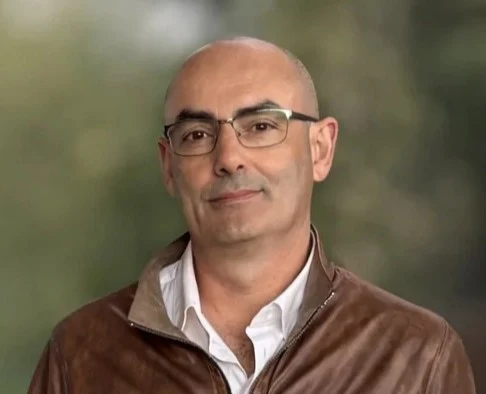
Dr. Juan Segurola
Esta web reúne las iniciativas corporativas y personales de divulgación científica y difusión del conocimiento de Juan Segurola. Su objetivo es ordenar y presentar la bibliografía de forma sencilla y accesible, ayudando al lector a encontrar y elegir los artículos, libros, revisiones y documentos técnicos que le interesen. Las colecciones se organizan por comunidad, tema y serie, con recorridos de lectura para distintos intereses y niveles de familiaridad. Las tres comunidades reúnen en un único catálogo las publicaciones de ingeniería, El universo y sus observadores y los trabajos de otros ámbitos del conocimiento.
Los intereses divulgativos de Juan Segurola abarcan la química de materiales y la fabricación aditiva, el universo y la aparición de la vida, la historia de la ciencia y las formas en que construimos y evaluamos el conocimiento. Su propósito es conectar temas especializados con preguntas más amplias y acercarlos a públicos científicos, generales, juveniles e infantiles. La colección multidisciplinar permite incorporar otros intereses, procurando distinguir entre evidencia documentada, interpretación e hipótesis del autor.
Cada serie presenta la pregunta o necesidad que aborda. Cuando están disponibles, sus libros aparecen en el orden de edición científica, público general, juvenil e infantil, seguidos de los artículos numerados. Puedes explorar las colecciones o buscar por título, serie o DOI. Las fichas ofrecen la descripción del registro o un resumen procedente de la fuente, acceso a los PDF y enlaces al registro original de Zenodo y a su historial de versiones.
3Dresyns · Publicaciones científicas y técnicas
La colección de 3Dresyns incorpora a este catálogo la vertiente corporativa de ingeniería y divulgación técnica. La impresión 3D, conocida habitualmente como fabricación aditiva (AM, por sus siglas en inglés), permite crear objetos a partir de modelos digitales mediante la adición de material, normalmente capa a capa. Este campo incluye procesos para polímeros, metales, cerámicas y otros materiales. Dentro de él, la fotopolimerización utiliza la luz para endurecer resinas reactivas. Estas publicaciones conectan la química de los materiales con las condiciones de impresión, la medición, la cualificación y las aplicaciones industriales, para ayudar al lector a comprender las posibilidades y los límites de cada enfoque.
Las decisiones de ingeniería requieren relacionar el comportamiento de los materiales, las condiciones de fabricación y las exigencias de cada aplicación. Esta comunidad reúne investigaciones, revisiones y publicaciones técnicas sobre fotopolímeros, fabricación aditiva y procesado de materiales para facilitar esas conexiones. Ofrece un espacio propio a la colección de ingeniería, con atención a la medición, la cualificación, la reproducibilidad y los límites de la evidencia disponible.
ER · Revisiones de ingeniería
Estas revisiones conectan la evidencia publicada con las preguntas que surgen al seleccionar, procesar y cualificar materiales fotopoliméricos. Organizan los resultados por material, mecanismo, proceso y aplicación, haciendo explícitas las condiciones y los límites de cada conclusión.
Artículos y revisiones
- ER-000 · Engineering Reviews ER-001 to ER-200: Corpus Scope, Evidence Architecture and Reading Guide
- ER-001 · Optical photopolymers for additive manufacturing: reporting practices and cross-study comparability
- ER-002 · Beyond the working curve: industrial perspectives on cross-platform process equivalence in vat photopolymerization
- ER-003 · Material-process coupling in nanoimprint lithography: stamp mechanics, resist behaviour and demolding energetics
- ER-004 · Spatial selectivity mechanisms in volumetric photopolymerisation
- ER-005 · Reproducibility limits of working-curve characterisation in vat photopolymerisation: a methodological perspective
- ER-006 · Biological response in photopolymer additive manufacturing: a review of formulation chemistry, workflow variables and qualification constraints in dental and biomedical applications
- ER-007 · Electrically Functional Photopolymer Resins for Vat Photopolymerisation: A Compact Framework for System-Dependent Performance
- ER-008 · A Structural Accessibility Hypothesis for Interpreting Negative Biodegradation Results in Crosslinked Photopolymer Networks
- ER-009 · Water-Removable Sacrificial Photopolymers for Indirect Additive Manufacturing: Mechanistic Frameworks, Process Coupling and Emerging Applications
- ER-010 · Metrology of Vat Photopolymerisation: Resolution, Trueness, Precision and Geometric Fidelity Across Scales
- ER-011 · Molecular Design of Bio-Based Photoresins for Vat Photopolymerisation: Renewable Building Blocks, Network Architecture and Performance Trade-Offs
- ER-012 · Engineering Qualification of Vat-Printed Organ-on-Chip Materials: Optical Background, Molecular Sorption, Gas Transport, Extractables and Microfluidic Fidelity
- ER-013 · Self-Healing and Interlayer Repair in Photopolymer Additive Manufacturing: Mechanisms, Network Mobility and Validation Limits
- ER-014 · Antimicrobial Photopolymers for Vat Photopolymerisation: Mechanisms, Efficacy Testing, Leaching and Durability
- ER-015 · Transport, Degradation and Mechanical Evolution in Vat-Printed Tissue-Engineering Scaffolds: Coupled Design and Qualification
- ER-016 · Electromagnetic Shielding Qualification of Vat-Printed Conductive Composites: Shielding Effectiveness, Frequency, Thickness and Anisotropy
- ER-017 · Life-Cycle Assessment of Vat Photopolymerisation: Functional Units, System Boundaries, Inventory Quality and Uncertainty
- ER-018 · Machine-Learning-Assisted Photopolymer Formulation: Inverse Design, Active Learning and Multi-Objective Optimisation
- ER-019 · Radiation-Functional Photopolymers for Additive Manufacturing: Scintillation, Shielding and Dosimetric Constraints
- ER-020 · Thermal Performance in Vat-Photopolymerised Polymers: HDT, Tg, Post-Cure and High-Temperature Qualification
- ER-021 · Piezoelectric Photopolymer Composites for Vat Photopolymerisation: Poling, Electromechanical Coupling and Device-Level Constraints
- ER-022 · Photopolymer Materials for Ophthalmic Additive Manufacturing: Optical Quality, Surface, Ageing and Biocompatibility Requirements
- ER-023 · Vat Photopolymerisation of Implantable Ceramics: Processing, Sintering, Bioactivity and Qualification Constraints
- ER-024 · Photopolymer Materials for Soft Robotics: Actuation, Compliance, Fatigue and Multi-Material Constraints in VPP
- ER-025 · Digital Photopolymer Printing Plates and Stamps: Material Requirements, Relief Fidelity and Durability in Vat Photopolymerisation
- ER-026 · Cellular and TPMS Photopolymer Architectures in Vat Photopolymerisation: Relative Density, Topology and Mechanical Qualification
- ER-027 · Conversion Metrology and Spatial Cure Heterogeneity in Vat Photopolymerisation: From Exposure to Network State
- ER-028 · Inkjet Jetting Physics for Photopolymer Materials: Rheology, Waveform, Satellite Formation and Cure Timing
- ER-029 · Material Photophysics for Two-Photon Polymerisation: Nonlinear Absorption, Threshold Chemistry and Voxel Growth
- ER-030 · Oxygen Inhibition and Free-Surface/Interfacial Cure in VPP: A Qualification and Minimum-Reporting Note
- ER-031 · Cure Shrinkage, Residual Stress and Warpage in VPP: A Qualification and Minimum-Reporting Note
- ER-032 · Photopolymer Storage, Reuse and Open-Vat State: Evidence Boundaries and Qualification Requirements
- ER-033 · Washing- and Drying-Induced Extraction, Property Change and Dimensional Response in Vat-Printed Photopolymers
- ER-034 · Separation and Peel Mechanics in Bottom-Up VPP: A Qualification and Minimum-Reporting Note
- ER-035 · Interpreting Critical Exposure and Penetration Depth in Vat Photopolymerization
- ER-036 · Rheology, Recoating and Dispersion Control of Highly Filled VPP Suspensions
- ER-037 · Debinding Defect Formation in Photopolymer-Derived Ceramic and Metal Green Bodies
- ER-038 · Additively Manufactured Investment-Casting Patterns: Burnout, Shell Compatibility and Accepted-Casting Qualification
- ER-039 · Fatigue and Time-Dependent Deformation in Vat-Printed Thermosets: A Qualification and Evidence-Gap Note
- ER-040 · Tribology and Wear Qualification of Vat-Printed Parts: Tribosystem Definition, Measurement and Transfer Limits
- ER-041 · Chemical Resistance and Solvent Uptake of Vat-Printed Photopolymers: Qualification Boundaries and Recovery
- ER-042 · Sterilisation of Vat-Printed Photopolymers: Dimensional Evidence and Qualification Gaps
- ER-043 · Multimaterial VPP Interfaces and Functionally Graded Networks: Qualification and Failure-Mode Controls
- ER-044 · Photoabsorbing Fillers, Optical Response and Cure-Depth Control in Vat Photopolymerisation
- ER-045 · Flame-Retardant Vat-Photopolymer Composites: Evidence Limits and Test Architecture
- ER-046 · Outgassing and Vacuum Qualification of Photopolymer Materials and Vat-Printed Parts
- ER-047 · Thermal Conductivity in Vat-Photopolymerised Composites: Formulation, Anisotropy and Measurement
- ER-048 · 4D Photopolymer Actuation: Qualification Limits for Biomedical Translation
- ER-049 · Direct and Indirect Additive Manufacturing for Advanced Ceramics and Metals: Evidence-Based Route Selection
- ER-050 · True Foam Photopolymers for Vat Photopolymerisation: Foaming Routes, Network Mobility and Cellular-Structure Qualification
- ER-051 · Vat-Photopolymerised Materials for Custom Orthoses and Prosthetic Interfaces: Device Mechanics, Workflow Qualification and Evidence Boundaries
- ER-052 · Online Configuration of Multifunctional Photopolymer Systems: A Multivariable, Multiobjective Framework for Vat Photopolymerisation
- ER-053 · Substrate and Build-Platform Adhesion in Vat Photopolymerisation: Wetting, Surface Treatment, Cure-State Coupling and Qualification
- ER-054 · Gas Barrier and Molecular Permeability in Vat-Printed Photopolymers: Diffusion, Sorption, Network State, Defects and Qualification
- ER-055 · Optical Waveguides and Light Guides in Vat-Printed Photopolymers: Refractive-Index Contrast, Propagation Loss, Scattering, Coupling and Qualification
- ER-056 · Photoluminescent Photopolymers in Vat Photopolymerisation: Fluorescence, Phosphorescence, Cure-Spectrum Coupling, Reabsorption, Scattering and Qualification
- ER-057 · CO2 Capture by Vat-Printed and Photopolymer-Derived Structures: Uptake Mechanisms, Mass Transfer, Regeneration and Qualification
- ER-058 · Dual-Colour Photoinitiator Design Space for Xolography: Photochemical Requirements, Molecular Variability, Patent Boundaries and Resin-Matrix Opportunities
- ER-059 · Sequential Dual-Cure Networks in Vat Photopolymerisation: Geometry Fixation, Secondary Network Formation and Property Homogenisation
- ER-060 · Polymerisation-Induced Phase Separation in Vat Photopolymerisation: Kinetic Competition, Morphology Arrest and Functional Microstructure
- ER-061 · Gelation, Vitrification and Mobility Arrest in Vat Photopolymerisation: From Network Percolation to Diffusion-Controlled Cure
- ER-062 · Living and Reactivatable Polymer Networks in Vat Photopolymerisation: RAFT, Photoiniferter and Nitroxide-Mediated Post-Print Growth
- ER-063 · Covalent Adaptable Networks and Vitrimer Topology in Vat Photopolymerisation: Exchange Kinetics, Reprocessing and Dimensional Stability
- ER-064 · Thiol–Ene and Thiol–Yne Photopolymerisation in VPP: Stoichiometry, Oxygen Response and Network Architecture
- ER-065 · Cationic Ring-Opening Photopolymerisation in VPP: Photoacid Generation, Dark Cure, Humidity and Epoxy/Oxetane Network Formation
- ER-066 · Vat Photopolymerisation of High-Molecular-Weight Polymer Latexes: Colloidal Printability, Scaffold Formation, Coalescence and Pseudothermoplastic Reprocessing
- ER-067 · Hierarchical and Double-Network Hydrogels in Vat Photopolymerisation: Microgel Reinforcement, Interpenetration and Energy Dissipation
- ER-068 · Toughening Mechanisms in Vat-Photopolymerised Thermosets: Network Topology, Phase Morphology, Reinforcement and Process Trade-Offs
- ER-069 · Fatigue-Crack Growth and Subcritical Fracture in Vat-Photopolymerised Thermosets: Crack Preparation, Cyclic Driving Force, Environment and Qualification
- ER-070 · Fracture Toughness and Damage Tolerance in Vat-Photopolymerised Thermosets: Crack Preparation, Cure State, Anisotropy and Qualification
- ER-071 · In-Situ Monitoring and Closed-Loop Control in Vat Photopolymerisation: Sensors, State Estimation, Digital Twins and Adaptive Exposure
- ER-072 · Environmental Ageing and Property Retention in Vat Photopolymerisation: Resin Storage, Photooxidation, Hydrothermal Conditioning and State-Resolved Qualification
- ER-073 · Interlayer Cohesion and Mechanical Anisotropy in Vat-Photopolymerised Thermosets: Cure Overlap, Network Continuity and Qualification
- ER-074 · Cleavable and Depolymerisable Networks in Vat Photopolymerisation: Triggered Disassembly, Fragment Identity and Closed-Loop Qualification
- ER-075 · Material Operating Windows in Tomographic Volumetric Additive Manufacturing: Gelation Criteria, Inhibition Reserve, Optical Transport and Exposure Drift
- ER-076 · Optical Attenuation and Cure-Profile Physics in Particle-Filled Vat Photopolymerisation: Absorption, Scattering, Refractive-Index Contrast and Feature Broadening
- ER-077 · Long-Wavelength and Superlinear Photoinitiation in Vat Photopolymerisation: Action Spectra, Photon Upconversion, Curing Contrast and Qualification
- ER-078 · Color and Appearance Metrology in Vat-Printed Photopolymers: CIELAB, CIEDE2000, Metamerism, Gloss, Surface Texture and Gonioappearance
- ER-079 · Surface Metallization and Electroforming on Vat-Printed Photopolymers: Activation, Seed Layers, Adhesion, Coverage and Qualification
- ER-080 · In-Can Stability and Premature Polymerisation in Radiation-Curable Formulations: Inhibitor Mechanisms, Residual Acidity, Thiol Chemistry, Pigment/Filler Effects, Metallic-Ink Instability, Packaging Redox and Thermal Transport Risk
- ER-081 · In-Can Stability, Latency and Premature Cationic Polymerisation in Light-Curable Formulations
- ER-082 · Photobase-Mediated and Base-Catalysed Photocuring in Vat Photopolymerisation: Generator Release, Michael-Addition Networks, Ring-Opening Routes, Anionic Boundaries and Latency Qualification
- ER-083 · Photocuring Pathway Taxonomy for Vat Photopolymerisation: Active Species, Network-Formation Modes, Spatial Gating and Qualification Boundaries
- ER-084 · Mechanistic Atlas of Photocuring Pathways in Vat Photopolymerisation: From Optical Trigger to Network Formation and Structural Evolution
- ER-085 · Vat-Photopolymerised Water-Soluble Sacrificial Tooling for Ceramic and Metal Powder Injection Moulding: Process-Class Boundaries, Intricate Geometry, Aqueous Removal and Qualification Requirements
- ER-086 · Analytical Extractables and Leachables from Vat-Printed Photopolymers: Specimen State, Extraction Design, Analytical Coverage and Cross-Study Comparability
- ER-087 · Magnetically Functional Photopolymer Composites in Vat Photopolymerisation: Filler Dispersion, Cure Coupling, Magnetic State and Field-Programmed Response
- ER-088 · Surface Topography and Finishing of Vat-Printed Photopolymers: Roughness Metrology, Orientation, Stair-Stepping, Polishing and Functional Transfer
- ER-089 · Leak Testing and Seal Qualification of Vat-Printed Fluidic Components: Through-Defects, Interfaces, Pressure Decay and Bulk-Permeation Boundaries
- ER-090 · Dynamic Mechanical Damping and Viscoelastic Energy Dissipation in Vat-Printed Photopolymers: Frequency, Temperature, Cure State, Architecture and Qualification
- ER-091 · Historical Evidence Density and Hazard Classification of UV-Curable (Meth)acrylate Monomers
- ER-092 · Residual Reactants, Impurities and Manufacturing Conversion as Hidden Drivers of Photopolymer Hazard
- ER-093 · Occupational Contact Dermatitis in UV-Curable and Vat-Photopolymerisation Workflows: Exposure Routes, Sensitisation, Diagnosis and Prevention
- ER-094 · Monomer Structure-Hazard Relationships in Photo-Curable (Meth)acrylates: Electrophilicity, Functionality, Molecular Architecture, Cross-Reactivity and Limits of Read-Across
- ER-095 · Photoinitiator Migration and Substitution in Vat Photopolymerisation: Spectral Compatibility, Conversion, Residual Species, Photoproducts and Qualification
- ER-096 · Thermal Expansion and Thermomechanical Dimensional Stability in Vat-Printed Photopolymers
- ER-097 · Wettability and Capillary Flow in Vat-Printed Microfluidic Channels
- ER-098 · Charge-Transfer-Complex Photoinitiation for Visible-Light Additive Manufacturing
- ER-099 · Dispersant Chemistry for Photo-Curable Resins, Oligomers and Monomers in 2D, 2.5D and 3D Photopolymerisation
- ER-100 · From Individual Reviews to a Qualification Corpus: Evidence Architecture Across Engineering Reviews ER-01 to ER-99
- ER-101 · Elastomeric and Rubber-Like Photopolymers for Vat Photopolymerisation: Network Design, Tear Resistance, Creep, Compression Set and Cyclic Durability
- ER-102 · Silicone and Silicone-Like Elastomers in Vat Photopolymerisation: Polysiloxane Chemistry, Silicone-Free Functional Analogues, Thermal-Service Limits and Qualification
- ER-103 · Polyurethane, Polyurea and Urethane-Acrylate Photopolymers for Vat Photopolymerisation: Chemical Identity, Segment Architecture, Hydrogen Bonding, Hydrolysis and Qualification
- ER-104 · Fluorinated and Fluoropolymer-Derived Photopolymers for Vat Photopolymerisation: Chemical Identity, Surface Energy, Optical-Cure Trade-Offs, Chemical Resistance, PFAS Boundaries and Qualification
- ER-105 · Polyimide and Polyimide-Precursor Photopolymers for Vat Photopolymerisation: Chemical Identity, Organogel Formation, Imidisation, Shrinkage, Void Formation and High-Temperature Qualification
- ER-106 · Cyanate-Ester, Maleimide/Bismaleimide and Benzoxazine Photopolymers for Vat Photopolymerisation: Photo-Triggered Networks, Thermal Post-Cure and Qualification
- ER-107 · Phenolic, Lignin-Derived and Bio-Aromatic Photopolymers for Vat Photopolymerisation: Native Polycondensation, (Meth)acrylate Functionalisation, Optical Attenuation, Volatile Evolution and Qualification
- ER-108 · Furan, Furfuryl, Tetrahydrofurfuryl and FDCA-Derived Materials for Vat Photopolymerisation: Chemical Identity, Radical and Diels-Alder Routes, Dynamic Networks and Qualification
- ER-109 · Isosorbide-Derived Photoresins for Vat Photopolymerisation: Methacrylate and Thiol-Yne Routes, Rigidity, Toughening, Thermal State and Qualification
- ER-110 · Itaconic-Acid-Derived Photoresins for Vat Photopolymerisation: Unsaturated Polyesters, Poly(ester amide)s, Itaconamides, Reactive Diluents and Qualification
- ER-111 · Dithiolane and Lipoate Photoresins for Vat Photopolymerisation: Ring-Opening Disulfide Networks, Dynamic Exchange, Depolymerisation, Reprinting and Qualification
- ER-112 · Thioester-Containing Photoresins for Vat Photopolymerisation: Thiol–Thioester Exchange, Controlled Degradation, Filler Recovery, Oligomer Reuse and Qualification
- ER-113 · Hemiacetal-Ester and N,O-Acetal Photoresins for Vat Photopolymerisation: Acid-Triggered De-crosslinking, Hydrolysis, Reprocessing, Polymer Recovery and Qualification
- ER-114 · Poly(β-amino ester) Photoresins for Projection Micro-Stereolithography: Aza-Michael Macromer Identity, Hydrolytic Degradation, Surface-to-Bulk Transition, Resolution and Qualification
- ER-115 · Poly(propylene fumarate) Photoresins for Stereolithography: Oligomer Identity, Reactive-Diluent Control, Temperature–Viscosity Coupling, Pulsed-UV Cure and Qualification
- ER-116 · Poly(trimethylene carbonate) Photoresins for Stereolithography: Macromer Identity, Non-Reactive Diluent, Elastic Networks, Perfusable Channels, β-TCP Composites and Qualification
- ER-117 · Poly(ε-caprolactone) Photoresins for Stereolithography: Macromer Identity, Temperature-Assisted Processing, Methacrylation, Degradation, Hybrid Networks and Filled-Gyroid Qualification
- ER-118 · Polylactide Photoresins for Stereolithography: Stereochemical and Molar-Mass Identity, Urethane-Methacrylate and Triacrylate Routes, Laser-Modality Dependence, Upcycling and Qualification
- ER-119 · Glycerol-Derived Acrylate Photoresins: Polyglycerol-Acrylate versus Poly(glycerol sebacate) Acrylate, CAL, DLP, Extrusion, Post-Cure, Degradation and Qualification
- ER-120 · POMaC Citrate-Containing Photocurable Elastomers: Dual Crosslinking, LCD Vat Printing, Porogen Extraction, Granular Composite Bioinks and Qualification
- ER-121 · Methacrylated Silk-Fibroin Photoresins: Protein Source, GMA Functionalisation, Aqueous DLP, Hydration, Mechanics, Biological State and Qualification
- ER-122 · Collagen Methacryloyl Photoresins: Collagen Source, Methacrylation, Triple-Helix State, Low-Temperature DLP, Hydration, Enzymatic Degradation and Qualification
- ER-123 · Chitosan-Derived Photocurable Hydrogels: Molecular Weight, Degree of Deacetylation, Methacrylation, Acid-Neutral State, Hybrid PEG Networks, SLA/4D Printing and Qualification
- ER-124 · Hyaluronic-Acid Methacrylate/Methacryloyl Photoresins: Source, Molecular Weight, Substitution, DLP Hybrid Networks, Hydration, Hyaluronidase Degradation and Qualification
- ER-125 · Alginate-Methacrylate Photoresins: Source, M/G Composition, Methacrylation Route, Covalent-Ionic Dual Networks, Hydration, Degradation and Qualification
- ER-126 · Dextran-Methacrylate Photoresins: Molecular Weight, Degree of Substitution, Solvent State, DLP Hybrid Networks, Washing, Degradation and Qualification
- ER-127 · Methacrylated-Starch Photoresins: Botanical Source, Amylose/Amylopectin Composition, Gelatinisation, Substitution, Aqueous DLP, Hybrid Bioinks and Qualification
- ER-128 · Photocurable Cellulose-Derived Photoresins: Cellulose and CMC Identity, Carboxymethyl and Methacrylate Substitution, Nanocrystal Functionalisation, Aqueous DLP/TPP, Hydration and Qualification
- ER-129 · Photocurable Pectin-Derived Hydrogels: Botanical Identity, Esterification, Methacrylation and Norbornene Routes, Ionic-Photo Dual Networks, Hydration, Degradation and Qualification
- ER-130 · Methacrylated Kappa-Carrageenan Photoresins: Algal Source, Sulfation, Methacrylation, Thermo-Ionic-Photo Networks, Extrusion and DLP, Hydration and Qualification
- ER-131 · Methacrylated Gellan-Gum Photoresins: Microbial Identity, Acyl State, Methacrylation, Thermo-Ionic-Photo Networks, Extrusion, Hydration and Qualification
- ER-132 · Photocurable Pullulan-Derived Photoresins: Microbial Identity, Methacrylate and Norbornene Routes, Inkjet, SLA-TPP, DLP, Hydration and Qualification
- ER-133 · Methacrylated Konjac-Glucomannan Photoresins: Botanical Identity, Acetylation, Oxidation, Substitution, Extrusion, Microspheres, Wound Composites, Hydration and Qualification
- ER-134 · Xanthan-Gum-Enabled Photocurable Bioinks: Microbial Identity, Unsaturated Derivatives, Rheology, Methacrylated Xanthan, Extrusion, Hydration, Network Attribution and Qualification
- ER-135 · Photocurable Guar-Gum-Derived Hydrogels: Botanical Identity, Hydroxypropylation, Methacrylation, Dual Networks, Extrusion, Hydration and Qualification
- ER-136 · Agarose and Methacrylated Agarose in Photocurable Biofabrication: Algal Identity, Gelation Hysteresis, Derivatisation, Microgel Photoannealing, Support Baths, Network Attribution and Qualification
- ER-137 · Locust-Bean-Gum-Derived Photocurable Hydrogels: Carob Identity, Galactomannan Structure, Methacrylation, Oxidation, Network Attribution, Injectability, Hydration and Qualification
- ER-138 · Gum-Arabic-Derived Crosslinkable Hydrogels: Acacia Identity, Methacrylation, Periodate Oxidation, DIW Network Attribution and Photocure Qualification
- ER-139 · A State-Resolved Framework for Industrial Additive-Manufacturing Technology Selection Across Polymers, Metals, Ceramics and Advanced Materials
- ER-140 · Polymer Material Extrusion for Industrial Production: Filament FFF/FDM, Pellet Extrusion and Reactive Screw/Large-Format Extrusion
- ER-141 · Polymer Powder-Bed Additive Manufacturing: SLS, MJF, HSS and SAF
- ER-142 · Industrial Vat-Photopolymerisation Architectures: SLA, DLP, LCD/MSLA and Continuous Printing
- ER-143 · Material Jetting and Inkjet Additive Manufacturing
- ER-144 · Direct Ink Writing and Paste Extrusion
- ER-145 · Laser Powder-Bed Fusion of Metals: Density, Geometric Freedom, Residual Stress, Supports, Productivity and Qualification
- ER-146 · Electron-Beam Powder-Bed Fusion of Metals: Vacuum Processing, Preheating, Alloy Windows, Surface State and Qualification
- ER-147 · Metal Binder Jetting: Green Strength, Depowdering, Debinding, Sintering, Shrinkage, Throughput and Qualification
- ER-148 · Bound-Metal Material Extrusion: Filament and Pellet Feedstocks, Green-Part Anisotropy, Debinding, Sintering and Qualification
- ER-149 · Lithography-Based Metal Manufacturing: Metal-Filled Photoresins, Cure–Loading Trade-Offs, Debinding, Sintering and Qualification
- ER-150 · Directed-Energy Deposition and Wire-Arc Additive Manufacturing: Repair, Large-Scale Deposition, Thermal History, Machining and Qualification
- ER-151 · Vat Photopolymerisation of Ceramics
- ER-152 · Ceramic Direct Ink Writing and Robocasting
- ER-153 · Ceramic and Sand Binder Jetting
- ER-154 · Bound-Ceramic Material Extrusion ER-154 Engineering Review
- ER-155 · Polymer-Binder Powder-Bed Routes ER-155 Engineering Review
- ER-156 · Nano and Micron Raw Materials for Manufacturing 2D and 3D Advanced Materials: Physical Form, Dispersion, Loading, Direct and Indirect Routes, and Qualification
- ER-157 · Electrically and Thermally Functional Nano/Micron Materials for Additive Manufacturing: Conductivity, ESD, EMI Shielding, Percolation, Interfaces, Anisotropy and Qualification
- ER-158 · Dielectric, Ferroelectric, Piezoelectric and Magnetically Functional 3D Materials: Loading, Alignment, Poling, Field Response and Device Qualification
- ER-159 · Optical, Photonic, Luminescent, High-Refractive-Index and Radiation-Functional 3D Materials: Scattering, Attenuation, Spectral Response and Qualification
- ER-160 · Highly Specialised Photopolymer Resins for Extreme Service: High Temperature, Chemical Resistance, Flame Resistance, Gas Barrier, Electrical Insulation and Qualification
- ER-161 · Adaptive, Soft and Application-Specific 3D Resins: 4D and Shape-Memory, Self-Healing, Hydrogel, Silicone-Like, Foam, Microfluidic, High-Security and Process-Specialty Systems
- ER-162 · From Printer Capability to Qualified Factory Route
- ER-163 · Support Strategies for Internal Channels and Sacrificial Geometries in Industrial Additive Manufacturing
- ER-164 · Non-Destructive Evaluation of Vat-Photopolymerised Parts
- ER-165 · Adhesive Bonding and Structural Joining of Printed Photopolymers
- ER-166 · Load Introduction into Vat-Photopolymerised Parts: Inserts, Threads, Press Fits and Overmoulded Interfaces
- ER-167 · Secondary Machining of Vat-Photopolymerised Parts
- ER-168 · Coating and Encapsulation of Reactive Photopolymer Substrates: Surface Cure State, Residual-Species Migration, Adhesion and Barrier Qualification
- ER-169 · Embedded Components and Hybrid Functional Assemblies: In-Process Embedding in Vat-Photopolymerised Parts: Pause, Placement, Resume, Interfacial Cure and Verification
- ER-170 · Accelerated Ageing and Life-Claim Validity for Printed Photopolymers: Acceleration Factors in a Material Whose State Is Still Evolving
- ER-171 · Design Values for Printed Photopolymers: Why Classical Allowables Methodology Does Not Transfer, and What Does
- ER-172 · Incoming Photoresin Raw Materials: Identity, Inhibitor Level, Functionality Distribution, Impurity and Lot Equivalence
- ER-173 · Batch Compounding, Homogenisation, Filtration and Filling of Photoresins: Which Process Variables Must Be Declared and Controlled, and the Evidence That Does Not Yet Exist
- ER-174 · Optical-State Characterisation and Drift Detection in Vat-Photopolymerisation Equipment: Spatial Irradiance, Spectrum and Divergence, and the Unclosed Ageing Question
- ER-175 · Printer Changeover, Cleaning Validation and Cross-Contamination Control
- ER-176 · Reactive Process Safety, Exotherm and Fire Risk in Photoresin Manufacture and Use
- ER-177 · Exposure Verification in Industrial Photopolymer Operations: Air and Dermal Sampling, Analytical Methods, Barrier Performance and Control Confirmation
- ER-178 · Solvent, Wash-Water and Contaminated-Waste Management
- ER-179 · Packaging and Storage-Excursion Qualification for Photoresins: Container Material, Headspace Oxygen, Light Transmission and Excursion Disposition
- ER-180 · Returned-Part Analysis for Printed Photopolymers: Reconstructing Cure State, Exposure History and Contamination from a Failed Component
- ER-181 · Post-Cure Process Engineering for Vat-Photopolymerised Parts: Dose Delivery, Chamber Geometry, Shadowing, Atmosphere and Thermal Coupling
- ER-182 · Network-State Metrology in Photopolymers: Gel Fraction, Effective Crosslink Density and the Non-Equivalence of Conversion, Insolubility and Modulus
- ER-183 · Mechanical Recycling and Reuse of Cured Photopolymer Waste: Size Reduction, Resin Reincorporation and Requalification
- ER-184 · Diagnostic Inference in Vat Photopolymerisation: Discriminating Between Competing Defect Mechanisms Under Uncertainty
- ER-185 · Thick-Section Photocuring of Putties, Gels, Sealants and Potting Compounds: Attenuation, Frontal Cure, Exotherm and Through-Cure Qualification
- ER-186 · Formulation and Cure of Light-Curable Adhesives Across 2D, 2.5D and 3D Assemblies: Optical Access, Bondline Kinetics and Dark-Zone Control
- ER-187 · Independence and Verification of Multimodal Authentication Features in Photocurable Inks and Coatings
- ER-188 · Electron-Beam versus Photoinitiated Curing of Acrylate Formulations: Network Formation Without a Photoinitiator, Depth-Dose Coupling and Requalification Boundaries
- ER-189 · Waterborne UV-Curable Dispersions: Water Removal, Coalescence, Photocure and Film-Formation Coupling
- ER-190 · Controlled Undercure in Radiation-Curable Pressure-Sensitive Adhesives: The Conversion Window, Residual Unsaturation as a Specification, and Migration from a Permanently Soft Layer
- ER-191 · Radiographic-Contrast Photopolymers for Phantoms, Sample Holders and X-Ray Workflows
- ER-192 · Photopolymers for Otoplastics and Hearing Devices: Shell and Earmould Mechanics, Skin-Contact State, Biofilm, Acoustics and Fit
- ER-193 · Vat-Photopolymerised Drug-Delivery and Pharmaceutical Devices: Resin Identity, Dose Incorporation, Release, Residuals and Qualification
- ER-194 · Photocurable Scaffolds for Cultured Meat and Food Biofabrication: Food-Grade Chemistry, Mass Transport, Texture and Process Qualification
- ER-195 · Cure-Shrinkage Stress at the Coating-Substrate Interface: Substrate Modulus, Thermal Mismatch and Adhesion Failure in Radiation-Curable Coatings
- ER-196 · Oxygen Inhibition and Photon Competition in Thin Pigmented Radiation-Curable Films: Why Surface Cure Governs Graphic Ink Performance
- ER-197 · Single-Vat Multimaterial Vat Photopolymerisation by Photochemical Addressing: Wavelength Selectivity, Dose Encoding, Reaction Orthogonality and Crosstalk
- ER-198 · Evidence for Material Circularity in Photopolymer Additive Manufacturing: Material-Loop Closure, Recovery Mass Balance, Recovered-Feedstock Identity and Property Retention
- ER-199 · Programming Anisotropy in 4D-Printed Liquid-Crystal Elastomers: Director Alignment, Vat-Photopolymerisation Routes, Actuation Fidelity and Drift
- ER-200 · From Individual Reviews to a Second Qualification Corpus: Evidence Architecture Across Engineering Reviews ER-101 to ER-199, State Variables, Scope Boundaries, Cross-Paper Couplings and Research Priorities
- ER-201 · Orthogonal Chemical-Identity Metrology for Photopolymer Oligomers
- ER-202 · Photoinitiator Action-Spectrum and Quantum-Yield Metrology
- ER-203 · Radiometric and Actinometric Traceability for Photopolymer Processing
- ER-204 · Transient Thermal-History Measurement During Photopolymerisation
- ER-205 · Spatial Cure-State Mapping by Raman and Infrared Spectroscopy
- ER-206 · Micro-Computed-Tomography Qualification of Printed Photopolymers
- ER-207 · Residual-Stress Measurement in Photopolymerised Parts
- ER-208 · Surface-Chemistry Mapping of Printed Photopolymers
- ER-209 · Interlaboratory Round-Robin Design for Vat-Photopolymer Materials
- ER-210 · Reference Artefacts and Benchmark Geometries for Additive-Manufacturing Qualification
- ER-211 · Reactive-Diluent Selection in Photocurable Formulations
- ER-212 · Oligomer Molecular Architecture in Photocurable Resins
- ER-213 · Inhibitor-Package Engineering in Radical Photopolymer Formulations
- ER-214 · Chain-Transfer Agents in Photopolymer Networks
- ER-215 · Iodonium and Sulfonium Photoacid Generators in Hybrid Radical–Cationic Systems
- ER-216 · Pigment–Dye–Photoinitiator Competition in Coloured Photopolymers
- ER-217 · Surface Functionalisation of Nano- and Microparticles for Photocurable Composites
- ER-218 · Moisture Tolerance of Epoxy, Oxetane and Vinyl-Ether Cationic Photoresins
- ER-219 · Volatile Reactive-Diluent Loss During Handling and Cure: Composition Drift, Emissions, Surface State and Requalification
- ER-220 · Quantifying Photobase Generation and Latent-Anionic Cure: Base Release, Neutralisation, Step-Growth, Polyaddition and Ring-Opening Polymerisation
- ER-221 · Adhesion of Photopolymer Coatings and Printed Features to Metals: Oxide State, Surface Preparation, Cure Stress and Durability
- ER-222 · Adhesion of Photopolymer Materials to Thermoplastics and Thermosets: Solubility Parameters, Interdiffusion, Primers and Ageing
- ER-223 · Adhesion of Photopolymer Materials to Glass and Ceramics: Silanisation, Hydroxylation, Moisture and Interfacial Fracture
- ER-224 · Primer Chemistry for Photocurable Interfaces: Coupling Reactions, Film Thickness, Cure Compatibility and Recoat Windows
- ER-225 · Plasma, Corona and UV-Ozone Treatment of Photopolymer Surfaces: Functionalisation, Ageing, Contamination and Bond Performance
- ER-226 · Release-Layer and Demoulding-Surface Engineering for Photocurable Processes: Interfacial Energy, Wear, Fouling and Transfer Fidelity
- ER-227 · Low-Friction and Lubricious Surfaces on Printed Photopolymers: Additives, Grafts, Coatings, Migration and Wear
- ER-228 · Antifouling and Biofilm-Resistant Photopolymer Surfaces: Hydration Layers, Topography, Leaching and Durability
- ER-229 · Anti-Icing, Icephobic and Condensation-Managing Photopolymer Surfaces: Wetting State, Thermal Cycling and Service Durability
- ER-230 · Repair Coatings and Recoat Interfaces on Aged Photopolymers: Surface Reactivation, Chemical Compatibility and Structural Recovery
- ER-231 · Statistical Size Effects and Weibull Analysis in Printed Photopolymers: Defect Populations, Gauge Volume and Design Interpretation
- ER-232 · Notch Sensitivity of Vat-Printed Thermosets: Root Radius, Orientation, Cure State and Fracture-Controlled Design
- ER-233 · Impact and High-Rate Response of Printed Photopolymers: Strain Rate, Temperature, Specimen Geometry and Failure Mode
- ER-234 · Compression, Local Buckling and Crushing of Printed Photopolymer Structures: Material State, Architecture and Boundary Conditions
- ER-235 · Multiaxial Strength and Failure Criteria for Printed Photopolymers: Combined Loading, Anisotropy and Model Validation
- ER-236 · Environmental Stress Cracking in Printed Photopolymers: Applied Stress, Sorption, Crazing, Crack Growth and Recovery
- ER-237 · Thermal-Cycling Durability of Printed Photopolymers and Hybrid Assemblies: Expansion Mismatch, Interface Damage and Property Drift
- ER-238 · Vibration and Random-Fatigue Qualification of Printed Photopolymer Components: Spectral Loading, Fixtures and Damage Accumulation
- ER-239 · Fretting and Repeated-Contact Damage in Printed Photopolymers: Contact Pressure, Slip Amplitude, Debris and Surface Evolution
- ER-240 · Creep Rupture and Long-Term Load Retention in Printed Photopolymers: Physical Ageing, Environment and Extrapolation Limits
- ER-241 · Exposure-Pattern Compensation in Vat Photopolymerisation: Optical Blur, Cure Spread, Geometry Bias and Model Transfer
- ER-242 · Grayscale and Spatial Dose Modulation in Vat Photopolymerisation: Local Conversion, Surface Shape and Property Gradients
- ER-243 · Pixel Geometry, Anti-Aliasing and Projection Optics in Masked Vat Photopolymerisation: Edge Placement and Feature Fidelity
- ER-244 · Recoating Dynamics of Low-Viscosity Photoresins: Meniscus Motion, Settling, Bubble Entrainment and Layer Uniformity
- ER-245 · Temperature Control of Resin Vats and Feed Systems: Viscosity, Kinetics, Gradients and Process Capability
- ER-246 · Resin-Level, Hydrostatic-Pressure and Free-Surface Control in Vat Photopolymerisation: Geometry, Refill and Drift
- ER-247 · Continuous Vat Photopolymerisation Dead Zones: Oxygen Transport, Membrane State, Heat and Print-Speed Limits
- ER-248 · Top-Down Vat Photopolymerisation: Free-Surface Optics, Recoating, Buoyancy, Supports and Scale-Up
- ER-249 · Large-Area Projection Stitching in Vat Photopolymerisation: Registration, Dose Overlap, Seam Formation and Qualification
- ER-250 · Support-Removal Effects on Fine Features and Internal Geometries: Access, Load Transfer, Surface Damage and Verification
- ER-251 · Biological-Evaluation Planning for Photopolymer Devices: Material State, Contact Category, Endpoints and Evidence Integration
- ER-252 · Cytotoxicity-Test Artefacts in Photopolymer Evaluation: Extraction Conditions, Dose Metrics, Controls and Result Interpretation
- ER-253 · Analytical Evaluation Thresholds for Photopolymer Extractables: Coverage, Identification, Quantitation and Uncertainty
- ER-254 · Toxicological Risk Assessment of Photopolymer Constituents and Leachables: Exposure, Hazard, Read-Across and Margin of Safety
- ER-255 · Skin-Contact Wearables Made from Photopolymers: Occlusion, Sweat, Friction, Sensitisation and Long-Term Use
- ER-256 · Mucosal-Contact Photopolymer Devices: Saliva, Mechanical Cycling, Biofilm, Extractables and Use-State Qualification
- ER-257 · Blood-Contacting Photopolymer Devices: Haemocompatibility, Surface State, Flow, Thrombosis and Sterilisation
- ER-258 · Bone–Implant Interfaces for Photopolymer-Derived Devices: Surface Chemistry, Porosity, Mechanics and Biological Evidence
- ER-259 · Durability of Antimicrobial Claims in Photopolymer Devices: Depletion, Fouling, Cleaning, Resistance and Test Design
- ER-260 · Digital Traceability of Patient-Specific Photopolymer Devices: Design Input, Material Lot, Process History and Release
- ER-261 · Printed Conductors and Resistive Elements in Photopolymer Systems: Percolation, Contact Resistance, Drift and Reliability
- ER-262 · Capacitive Sensors in Printed Photopolymer Structures: Dielectric State, Electrode Geometry, Humidity and Calibration
- ER-263 · Dielectric Breakdown and Insulation Ageing in Printed Photopolymers: Defects, Field Concentration, Temperature and Moisture
- ER-264 · Photopolymer-Enabled Electrochemical Electrodes: Surface Area, Binder State, Electrolyte Access and Cycling Stability
- ER-265 · Photopolymer-Derived Battery Components: Electrodes, Separators, Current Collectors, Cure Residuals and Cell Qualification
- ER-266 · Photopolymer-Derived Supercapacitor Architectures: Porosity, Conductivity, Electrolyte Wetting and Cycle Life
- ER-267 · Electroluminescent and Light-Emitting Photopolymer Composites: Field Distribution, Optical Loss, Heat and Ageing
- ER-268 · Photodetector and Photosensor Integration with Printed Photopolymers: Spectral Response, Encapsulation and Signal Stability
- ER-269 · Radiofrequency Antennas and Transmission Structures on Printed Photopolymers: Dielectric Loss, Metallisation and Geometry
- ER-270 · Phase-Change and Latent-Heat Materials in Printed Photopolymer Structures: Containment, Cycling and Thermal Management
- ER-271 · Primary-Data Carbon Accounting for Photopolymer Additive Manufacturing: Energy, Materials, Yield and Allocation
- ER-272 · Solvent-Recovery Mass Balances in Photopolymer Processing: Contaminant Build-Up, Separation Efficiency and Reuse Limits
- ER-273 · Regeneration and Reuse of Aqueous and Semi-Aqueous Wash Media: Dissolved Organics, Suspended Solids and Process Control
- ER-274 · Recovery of Unreacted Monomers and Photoinitiators from Photoresin Waste: Separation, Identity and Requalification
- ER-275 · Purification and Reuse of Products from Triggered Photopolymer Depolymerisation: Composition, Functionality and Closed-Loop Evidence
- ER-276 · Recovery and Requalification of Functional Fillers from Cured Photopolymer Composites: Separation, Surface State and Performance
- ER-277 · Particle and Microplastic Release from Printed Photopolymers: Wear, Weathering, Measurement and Exposure Boundaries
- ER-278 · Aquatic and Terrestrial Ecotoxicity of Uncured Photoresin Constituents and Mixtures: Exposure Realism and Evidence Gaps
- ER-279 · Analytical Monitoring of Photopolymer-Contaminated Wastewater: Target Species, Non-Target Screening and Treatment Verification
- ER-280 · End-of-Life Decision Hierarchies for Photopolymer Products: Reuse, Repair, Recycling, Recovery and Disposal
- ER-281 · Vat-Printed Microreactors for Chemical Processing: Residence-Time Distribution, Mixing, Compatibility and Scale-Out
- ER-282 · Printed Analytical Labware and Sample-Handling Devices: Contamination, Sorption, Cleanliness and Measurement Bias
- ER-283 · Vacuum-Compatible Fluidic and Pneumatic Components Made from Photopolymers: Leakage, Outgassing, Seals and Cycling
- ER-284 · Printed Composite Tooling for Lay-Up, Infusion and Cure: Surface, Permeability, Thermal Expansion and Tool Life
- ER-285 · Sacrificial Mandrels and Cores for Electroforming and Composite Manufacture: Removal, Surface Transfer and Dimensional Control
- ER-286 · Printed Models for Wind-Tunnel and Flow-Visualisation Testing: Surface Fidelity, Inserts, Pressure Taps and Load Limits
- ER-287 · Cryogenic Service of Printed Photopolymers: Glass Transition, Thermal Shock, Permeation, Fracture and Repeated Cycling
- ER-288 · Printed Fixtures and Holders for Radiation and Sterilisation Workflows: Dose Stability, Contamination and Reuse
- ER-289 · Food-Contact Tooling and Process Aids Made from Photopolymers: Migration, Cleaning, Wear and Regulatory Boundaries
- ER-290 · Photopolymer Additive Manufacturing for Cultural-Heritage Replication and Conservation: Fidelity, Reversibility and Ageing
- ER-291 · Digital Thread for Photopolymer Manufacturing: Requirements, Geometry, Material, Process, Inspection and Release
- ER-292 · Requirement Traceability for Additively Manufactured Photopolymer Parts: Allocation, Verification and Change Impact
- ER-293 · Change Control and Requalification of Photopolymer Materials and Processes: Equivalence, Risk and Evidence Depth
- ER-294 · Supplier-Quality Management for Photopolymer Raw Materials: Specifications, Audits by Evidence, Deviations and Continuity
- ER-295 · Process-Failure-Mode-and-Effects Analysis for Vat Photopolymerisation: State Variables, Detection and Control Priority
- ER-296 · Statistical Process Control for Photopolymer Manufacturing: Sampling, Control Charts, Drift and Multivariate Signals
- ER-297 · Calibration Management for Photopolymer Production and Testing: Traceability, Intervals, Guard Bands and Out-of-Tolerance Impact
- ER-298 · Data Integrity and FAIR Evidence for Photopolymer Qualification: Raw Data, Metadata, Audit Trails and Reuse
- ER-299 · Evidence-Maturity and Technology-Readiness Assessment for Photopolymer Manufacturing: Claims, Gates and Decision Confidence
- ER-300 · From Individual Reviews to a Third Qualification Corpus: Evidence Architecture Across Engineering Reviews ER-201 to ER-299, State Variables, Scope Boundaries, Cross-Paper Couplings and Research Priorities
- ER-301 · Frontal Photopolymerisation in Additive Manufacturing: Ignition, Propagation, Heat Feedback, Stability and Geometric Control
- ER-302 · Wavelength-Orthogonal Multistage Photopolymerisation: Independent Reactions, Spectral Crosstalk and Sequential Property Programming
- ER-303 · Triplet–Triplet-Annihilation Upconversion for Photopolymerisation: Sensitiser–Annihilator Pairs, Oxygen, Thresholds and Cure Depth
- ER-304 · Upconverting-Nanoparticle-Assisted Deep Photocuring: Excitation Transport, Local Emission, Heating and Network Uniformity
- ER-305 · Persistent-Radical and Afterglow-Mediated Photopolymerisation: Dark Reaction, Temporal Control and Dimensional Fidelity
- ER-306 · Oxygen-Tolerant Photoredox Polymerisation: Catalyst Cycles, Reducing and Oxidising Pathways, Regeneration and Residuals
- ER-307 · Organocatalytic Photocuring Without Conventional Photoinitiators: Catalyst Identity, Turnover, Spectral Activation and Limits
- ER-308 · Latent Thermal–Photo Dual-Trigger Networks: Sequencing, Shelf Stability, Conversion Partitioning and Final-State Qualification
- ER-309 · Mechanochemical Activation and Repair of Printed Photopolymer Networks: Force-Responsive Bonds, Local Chemistry and Verification
- ER-310 · Electrochemically Gated Polymerisation for Additive Manufacturing: Redox Control, Electrode Geometry and Spatial Selectivity
- ER-311 · Transesterification Vitrimers for Photopolymer Additive Manufacturing: Catalyst, Exchange Kinetics, Creep and Reprocessing
- ER-312 · Non-Cyclic Disulfide-Exchange Photopolymer Networks: Radical and Metathesis Routes, Light and Thermal Activation, Repair and Recycling
- ER-313 · Imine and Hydrazone Dynamic Photopolymer Networks: Water Sensitivity, Exchange, Mechanical Recovery and Chemical Recycling
- ER-314 · Reversible Diels–Alder Photopolymer Networks: Adduct Identity, Thermal Windows, Print Stability and Rework
- ER-315 · Boronic-Ester Dynamic Photopolymer Networks: Humidity, Diol Exchange, Self-Healing and Service Stability
- ER-316 · Transcarbamoylation and Urethane-Exchange Networks in Photocurable Materials: Catalysis, Creep, Repair and Reprocessing
- ER-317 · Reversible Silyl-Ether and Siloxane-Exchange Photopolymer Networks: Trigger Selectivity, Moisture and Dimensional Retention
- ER-318 · Hydrogen-Bonded and Multiple-Supramolecular Photopolymer Networks: Association Strength, Rate Dependence and Fatigue Recovery
- ER-319 · Metal–Ligand Dynamic Photopolymer Networks: Coordination State, Stimulus Response, Toughening and Reversibility
- ER-320 · Ionomeric and Ionic-Cluster Photopolymer Networks: Morphology, Conductivity, Self-Recovery and Environmental Sensitivity
- ER-321 · Decellularised-Extracellular-Matrix Photocurable Bioinks: Source Tissue, Processing, Methacrylation, Bioactivity and Variability
- ER-322 · Gelatin-Methacryloyl Bioinks: Gelatin Source, Degree of Functionalisation, Thermal State, Photocure and Cell Response
- ER-323 · PEG-Based Photocurable Bioinks: Architecture, Functionalisation, Mesh Size, Bioinertness and Bioactive Modification
- ER-324 · Fibrin and Fibrinogen in Photocurable Biofabrication: Enzymatic–Photo Dual Networks, Contraction and Remodelling
- ER-325 · Elastin and Tropoelastin-Derived Photocurable Materials: Molecular Identity, Elasticity, Crosslinking and Biological Function
- ER-326 · Gelatin–Norbornene Thiol–Ene Bioinks: Macromer Identity, Stoichiometry, Oxygen Response and Cell-Compatible Cure
- ER-327 · Photocurable Polypeptide and Recombinant-Protein Materials: Sequence, Functionalisation, Folding and Network Attribution
- ER-328 · Cell-Laden Volumetric Bioprinting: Optical Dose, Cell Shadowing, Gelation, Viability and Construct Fidelity
- ER-329 · Photocurable Organoid and Spheroid Manufacturing: Encapsulation, Nutrient Transport, Fusion and Functional Maturation
- ER-330 · Perfusable Vascular-Network Biofabrication: Channel Formation, Endothelialisation, Leakage, Flow and Remodelling
- ER-331 · Printed Micro-Optics in Photopolymers: Lens Form, Surface Error, Refractive State and Optical Qualification
- ER-332 · Two-Photon and Multiphoton Fabrication of Photopolymer Metasurfaces: Subwavelength Feature Control, Dispersion and Device Efficiency
- ER-333 · Microfluidic Valves, Pumps and Flow Regulators Made by Photopolymerisation: Compliance, Sealing and Cycle Life
- ER-334 · Photopolymer Microneedles: Geometry, Insertion, Fracture, Payload, Dissolution and Skin-Interface Qualification
- ER-335 · Microelectrode Arrays Integrated with Printed Photopolymers: Registration, Insulation, Impedance and Biological Interface
- ER-336 · Inkjet and Material-Jetting Deposition of Photocurable Encapsulants for MEMS and Microsensors: Registration, Interfaces and Reliability
- ER-337 · Light-Driven and Magnetically Driven Photopolymer Microswimmers: Fabrication, Actuation, Tracking and Fluid Interaction
- ER-338 · Photopolymer Photonic Crystals: Lattice Fidelity, Refractive-Index Contrast, Defects and Spectral Response
- ER-339 · Diffractive Optical Elements Made by Photopolymerisation: Phase Control, Surface Quantisation and Efficiency
- ER-340 · Nanofluidic Channels in Photopolymer Materials: Fabrication, Surface Charge, Wetting, Fouling and Transport
- ER-341 · Scale-Up of Photoresin Blending: Mixing Regimes, Addition Order, Heat, Air Entrainment and Batch Equivalence
- ER-342 · Inline Spectroscopy as Process Analytical Technology for Photoresins: Identity, Concentration, Conversion and Drift
- ER-343 · Predictive Maintenance for Vat-Photopolymerisation Equipment: Sensors, Degradation Signatures and Intervention Thresholds
- ER-344 · Machine-Capability Studies for Additive Manufacturing: Repeatability, Reproducibility, Nested Variation and Acceptance
- ER-345 · Build Layout, Part Nesting and Production Scheduling in Vat Photopolymerisation: Exposure Uniformity, Risk and Throughput
- ER-346 · Algorithmic Support Generation and Verification: Optimisation Objectives, Constraint Conflicts, Simulation and Human Override
- ER-347 · Automation of Washing, Drying and Post-Curing: Material State, Recipe Control, Transfer Timing and Release Evidence
- ER-348 · Cleanliness Zones and Contamination Control in Photopolymer Manufacturing: Air, Surfaces, Tools and Material Segregation
- ER-349 · Electronic Batch Records for Photopolymer Production: Data Capture, Recipe Enforcement, Exceptions and Auditability
- ER-350 · Cybersecurity of Digital Manufacturing Recipes and Equipment: Access, Integrity, Provenance and Recovery
- ER-351 · Heat Generation and Dissipation During Vat Photopolymerisation: Reaction Kinetics, Geometry, Transport and Hot Spots
- ER-352 · Reaction-Diffusion Fronts in Photopolymer Networks: Species Mobility, Autoacceleration, Gradients and Pattern Formation
- ER-353 · Buoyancy and Natural Convection in Photocurable Resins: Temperature, Density, Composition and Feature Distortion
- ER-354 · Cure Shrinkage Coupled to Resin Flow: Free Surfaces, Cavitation, Feeding and Internal Defect Formation
- ER-355 · Acoustic and Vibration Fields During Photopolymerisation: Bubble Motion, Particle Organisation and Cure Perturbation
- ER-356 · Electric-Field-Assisted Photopolymerisation: Filler Orientation, Charge Migration, Dielectrophoresis and Network Formation
- ER-357 · Magnetic-Field-Assisted Photopolymerisation: Particle Alignment, Chain Formation, Cure Arrest and Functional Anisotropy
- ER-358 · Shear-Induced Alignment Before Photocure: Fibres, Platelets and Orientation Retention Beyond Liquid-Crystal Elastomers
- ER-359 · Gravity and Build Orientation as Material-State Variables: Sedimentation, Buoyancy, Drainage and Cure Asymmetry
- ER-360 · Verification and Validation of Multiphysics Models for Photopolymer Additive Manufacturing: Parameters, Benchmarks and Uncertainty
- ER-361 · Mechanical Metamaterials Made by Photopolymerisation: Unit Cells, Boundary Effects, Nonlinearity and Qualification
- ER-362 · Auxetic Photopolymer Structures: Geometry, Manufacturing Defects, Strain Range and Failure
- ER-363 · Functionally Graded Lattices in Photopolymer Additive Manufacturing: Gradient Definition, Interface Continuity and Performance
- ER-364 · Negative-Stiffness and Snap-Through Photopolymer Architectures: Stability, Hysteresis, Fatigue and Control
- ER-365 · Impact-Energy-Absorbing Photopolymer Lattices: Crushing Modes, Rate Effects, Recovery and Repeatability
- ER-366 · Acoustic Metamaterials in Printed Photopolymers: Resonance, Damping, Manufacturing Variation and Band-Gap Verification
- ER-367 · Thermal Metamaterials and Heat-Flow-Shaping Structures: Effective Conductivity, Interfaces and Experimental Validation
- ER-368 · Fluidic Metamaterials and Architected Flow Networks: Hydraulic Response, Deformation and Scale Effects
- ER-369 · Embedded Pneumatic Networks for Soft Robotic Structures: Channel Integrity, Actuation, Fatigue and Control
- ER-370 · Origami and Kirigami Photopolymer Structures: Hinge Design, Folding Path, Damage and Deployment Repeatability
- ER-371 · Dielectric-Elastomer Actuators Built with Photopolymer Materials: Electrode Integration, Breakdown and Cycle Life
- ER-372 · Ionic and Electrochemical Polymer Actuators in Printed Structures: Ion Transport, Hydration, Strain and Drift
- ER-373 · Humidity-Responsive Photopolymer Actuators: Sorption, Swelling, Geometry, Hysteresis and Environmental Stability
- ER-374 · Thermally Responsive Photopolymer Actuators: Transition Temperature, Heating Route, Force and Cycling
- ER-375 · Optically Driven Photopolymer Actuators: Chromophore State, Light Penetration, Heat and Reversibility
- ER-376 · Magnetically Steered Soft Robots Made by Photopolymerisation: Magnetic Programming, Mechanics and Navigation
- ER-377 · Triboelectric Generators Integrated with Printed Photopolymers: Surface Charge, Contact Mechanics and Environmental Drift
- ER-378 · Piezoresistive Strain Sensors in Printed Photopolymer Composites: Percolation, Gauge Factor, Hysteresis and Fatigue
- ER-379 · Chemical and Gas Sensors Based on Printed Photopolymers: Sorption, Selectivity, Transduction and Regeneration
- ER-380 · Biosensors Integrated with Photopolymer Platforms: Immobilisation, Transport, Fouling, Signal Stability and Validation
- ER-381 · Low-Earth-Orbit Exposure of Photopolymer Materials: Vacuum, Radiation, Thermal Cycling and Contamination
- ER-382 · Atomic-Oxygen Erosion of Photopolymer Materials: Surface Recession, Oxidation, Coatings and Ground Simulation
- ER-383 · Combined Ultraviolet, Vacuum and Thermal Exposure of Photopolymers: Synergistic Ageing and Test Equivalence
- ER-384 · Cryogenic Compatibility of Dissimilar-Material Photopolymer Assemblies: Interfaces, Seals, Microcracking and Leak Integrity
- ER-385 · High-Pressure Service of Printed Photopolymers: Compression, Permeation, Creep, Sealing and Decompression Damage
- ER-386 · Subsea and Marine Service of Printed Photopolymers: Hydrostatic Pressure, Water Uptake, Biofouling and Fatigue
- ER-387 · Ionising-Radiation Ageing of Printed Photopolymers: Dose, Atmosphere, Chain Scission, Crosslinking and Property Change
- ER-388 · High-Dose Sterilisation Effects on Photopolymer Materials: Gamma, Electron Beam, Chemistry and Requalification
- ER-389 · Printed Photopolymers in Harsh Chemical-Process Environments: Mixed Chemicals, Temperature, Stress and Barrier Failure
- ER-390 · Fire Behaviour, Smoke and Toxic-Effluent Assessment of Printed Photopolymer Systems: Test Scale and Material State
- ER-391 · Ontologies for Photopolymer Materials, Processes and Qualification Evidence: Terms, Relations and Interoperability
- ER-392 · Minimum-Information Standard for Photopolymer Additive-Manufacturing Studies: Material, Machine, Process and Specimen State
- ER-393 · Machine-Readable Material Passports for Photopolymer Products: Composition Boundaries, Process History and End of Life
- ER-394 · Provenance and Citation Graphs for Engineering-Review Corpora: Sources, Claims, Versions and Dependency Control
- ER-395 · Living Systematic Reviews for Rapidly Changing Additive-Manufacturing Evidence: Search, Updating and Version Governance
- ER-396 · Resolving Conflicting Evidence in Photopolymer Engineering: State Mismatch, Measurement Bias and Decision Rules
- ER-397 · Negative Results and Failed Replication in Photopolymer Research: Reporting, Censoring and Engineering Value
- ER-398 · Benchmark Datasets for Photopolymer Modelling and Machine Learning: Coverage, Leakage, Shift and Fitness for Use
- ER-399 · Value-of-Information Methods for Prioritising Photopolymer Research: Uncertainty, Decision Impact and Experimental Choice
- ER-400 · From Individual Reviews to a Fourth Qualification Corpus: Evidence Architecture Across Engineering Reviews ER-301 to ER-399, State Variables, Scope Boundaries, Cross-Paper Couplings and Research Priorities
- ER-401 · Self-Driving Laboratories for Photopolymer Formulation: Closed-Loop Experimentation, Measurement Quality and Decision Governance
- ER-402 · Bayesian Optimisation of Photopolymer Formulations: Priors, Constraints, Mixed Variables and Experimental Efficiency
- ER-403 · Causal Inference in Photopolymer Process Development: Interventions, Confounding, Transportability and Mechanistic Claims
- ER-404 · Multimodal Foundation Models for Photopolymer Engineering: Text, Spectra, Images, Process Data and Evidence Grounding
- ER-405 · Physics-Informed Machine Learning for Photopolymerisation: Governing Equations, Data Assimilation and Extrapolation Limits
- ER-406 · Uncertainty Quantification for Data-Driven Photopolymer Models: Aleatoric Variation, Epistemic Gaps and Decision Calibration
- ER-407 · Active Learning Under Safety and Manufacturability Constraints: Candidate Selection, Feasible Regions and Stopping Rules
- ER-408 · Robotic Dispensing and Formulation of Photocurable Materials: Accuracy, Cross-Contamination, Mixing and Traceability
- ER-409 · Lifecycle Digital Twins for Photopolymer Products: Material State, Process History, Service Updating and Prediction
- ER-410 · Human Oversight and Reproducibility in Autonomous Materials Research: Authority, Auditability and Failure Containment
- ER-411 · Carbon-Dioxide-Derived Feedstock Claims in Photocurable Materials: Provenance Evidence, Carbonate and Carbamate Functionalisation, Carbon Accounting and Performance Limits
- ER-412 · Sulfur-Rich Photocurable Networks: High Refractive Index, Dynamic Bonds, Odour, Stability and Processing
- ER-413 · Phosphorus-Containing Photopolymer Networks: Flame Response, Ion Binding, Hydrolysis and Functional Performance
- ER-414 · Polymerisable Ionic Liquids in Photocurable Materials: Ionic Conductivity, Phase State, Cure and Environmental Stability
- ER-415 · Deep-Eutectic-Solvent-Containing Photocurable Systems: Component Identity, Speciation, Water, Polymerisation and Leaching
- ER-416 · Polymerisable Liquid-Crystal Systems Beyond Elastomers: Mesophase Control, Alignment, Optical Function and Stability
- ER-417 · Sequence-Controlled and Precision Oligomers for Photopolymer Networks: Synthesis Identity, Placement of Function and Property Attribution
- ER-418 · Reversible Radical Reservoirs in Photocurable Networks: Dormancy, Reactivation, Post-Print Growth and Long-Term Stability
- ER-419 · Orthogonal Photo-Click Reactions for Multimaterial Fabrication: Selectivity, Kinetics, Crosstalk and Network Compatibility
- ER-420 · Non-Covalent Glassy Networks for Photocurable Materials: Physical Crosslinks, Relaxation, Reprocessability and Service Limits
- ER-421 · Quantum-Dot-Containing Photopolymer Materials: Surface Chemistry, Optical Loss, Cure Interaction and Emission Stability
- ER-422 · Metal-Halide-Perovskite Photopolymer Composites: Moisture, Ion Migration, Cure Compatibility and Optoelectronic Performance
- ER-423 · Fast-Timing Scintillator Architectures Made with Photopolymers: Light Yield, Decay, Transport and Radiation Stability
- ER-424 · Neutron-Detection Materials and Structures Enabled by Photopolymerisation: Converter Loading, Light Collection and Discrimination
- ER-425 · Terahertz Components Made from Photopolymers: Dielectric Dispersion, Absorption, Geometry and Metrology
- ER-426 · Microwave Dielectric Resonators and RF Components in Printed Photopolymers: Permittivity, Loss and Thermal Stability
- ER-427 · Photopolymer Packaging and Interconnects for Integrated Photonics: Alignment, Coupling Loss, Stress and Reliability
- ER-428 · Microresonators and Frequency-Selective Optical Components Made by Photopolymerisation: Quality Factor, Surface and Drift
- ER-429 · Magneto-Optical Photopolymer Composites: Field Response, Optical Loss, Alignment and Device Integration
- ER-430 · Resistive-Switching and Neuromorphic Devices Integrated with Photopolymer Platforms: Interfaces, Variability and Endurance
- ER-431 · Living Bacterial Materials Integrated with Photocurable Matrices: Viability, Containment, Transport and Function
- ER-432 · Algae-Containing and Photosynthetic Printed Materials: Light Delivery, Gas Exchange, Growth and Mechanical Stability
- ER-433 · Mycelium–Photopolymer Hybrid Materials: Interface Formation, Growth, Moisture and Structural Performance
- ER-434 · Enzyme Immobilisation in Printed Photopolymer Structures: Activity Retention, Mass Transfer, Leaching and Reuse
- ER-435 · Cell-Free Protein-Synthesis Systems in Printed Matrices: Reagent State, Activation, Transport and Functional Lifetime
- ER-436 · Living Biosensing Materials Made by Photopolymerisation: Recognition, Signal Coupling, Containment and Calibration
- ER-437 · Enzyme-Programmed Degradation of Photopolymer Networks: Substrate Accessibility, Kinetics, Products and Control
- ER-438 · Immune-Interactive Photopolymer Materials: Protein Adsorption, Innate Response, Foreign-Body Reaction and Design Limits
- ER-439 · Sensor-Integrated Organ-on-Chip Platforms Made with Photopolymers: Materials, Signals, Drift and Biological Interpretation
- ER-440 · Biohybrid Actuators Combining Living Cells and Photopolymer Structures: Force Generation, Feeding, Control and Longevity
- ER-441 · Lunar-Regolith Photocurable Composites: Simulant Identity, Binder Demand, Vacuum, Radiation and Structural Qualification
- ER-442 · Martian-Regolith Photocurable Composites: Mineralogy, Perchlorates, Atmosphere, Temperature and Processing
- ER-443 · In-Space Vat Photopolymerisation: Containment, Optics, Heat, Motion and Part Release in Microgravity
- ER-444 · Microgravity Effects on Photopolymer Cure: Convection, Bubbles, Sedimentation, Interfaces and Network Uniformity
- ER-445 · Photoresin Storage, Transfer and Dispensing Under Vacuum or Reduced Gravity: Volatility, Wetting and Contamination
- ER-446 · Radiation-Hardened Photopolymer Materials for Space Service: Chemistry, Shielding, Dose History and Property Retention
- ER-447 · Photopolymer Seals, Windows and Fluidic Components for Extraterrestrial Habitats: Leakage, Dust and Cycling
- ER-448 · In-Situ Resource Utilisation Feedstocks for Photocurable Manufacturing: Separation, Variability, Qualification and Logistics
- ER-449 · Planetary-Protection Controls for Additive Manufacturing Materials and Equipment: Bioburden, Containment and Verification
- ER-450 · Long-Duration Storage of Photocurable Materials for Space Missions: Radiation, Thermal Excursions, Latency and Recovery
- ER-451 · Mechanical and Interfacial Design for Disassembly in Photopolymer Products: Reversible Joints, Access and Component Recovery
- ER-452 · Chemical Recycling of Acrylate and Methacrylate Photopolymer Networks: Bond Cleavage, Product Identity and Reuse
- ER-453 · Solvolysis of Photopolymer Networks: Solvent Selection, Mass Transfer, Separation and Recovered-Feedstock Quality
- ER-454 · Pyrolysis and Thermochemical Recovery of Photopolymer Waste: Product Distribution, Fillers, Emissions and Energy Balance
- ER-455 · Biogenic-Carbon Accounting in Bio-Based Photopolymer Materials: Feedstock, Land Use, Allocation and End of Life
- ER-456 · Purity Requirements for Recycled Monomers and Oligomers in Photocurable Formulations: Inhibitors, Colour and Cure
- ER-457 · Variability Management for Recovered Fillers in Photocurable Composites: Contamination, Surface State and Lot Control
- ER-458 · Membrane, Adsorptive and Hybrid Purification of Used Photopolymer Wash Solvents: Selectivity, Fouling and Quality Control
- ER-459 · Factory-Level Material-Flow Analysis for Photopolymer Manufacturing: Yield, Losses, Recovery and Inventory Reconciliation
- ER-460 · Extended-Producer-Responsibility and Product-Passport Models for Photopolymer Products: Data, Collection and Accountability
WP · Documentos técnicos
Esta colección explica enfoques prácticos de selección de fotopolímeros, calibración y control del proceso, incluidos el sistema CRT, SMSP y el método de cuña. Ayuda a relacionar la química de la resina, las condiciones de la impresora y las decisiones de trabajo con la reproducibilidad de la impresión y el rendimiento de las piezas.
Artículos y revisiones
- WP-001 · Vat photopolymerisation process control — the 3Dresyns CRT System
- WP-002 · Engineering selection of VPP photopolymers — the 3Dresyns SMSP
- WP-003 · The 3Dresyns Wedge Method
- WP-004 · The 3Dresyns Structured Selection Framework (SSF)
- WP-005 · The 3Dresyns Fine Tuner system
- WP-006 · Post-processing and cleaning chemistry for VPP — from print to validated part
- WP-007 · Engineering & Functional VPP Portfolio for SLA, DLP and LCD
- WP-008 · The MF Biocompatible VPP Framework — Monomer-Free Formulation as a Regulatory Engineering Strategy
- WP-009 · MF Bio dental portfolio for SLA, DLP and LCD — verified resin selection by clinical indication
- WP-010 · 3Dresyn PEEK-like — Polyetheretherketone-like VPP Photopolymer with Ultra-High Flexural Strength 120–140 MPa
- WP-011 · Perfect Cast Castable Portfolio for SLA, DLP and LCD
- WP-012 · Water-Soluble Sacrificial Portfolio (IM-WS) for SLA, DLP and LCD
- WP-013 · Silicone-like and PDMS-like VPP Photopolymers
- WP-014 · 4D Shape-Memory VPP Photopolymers
- WP-015 · UHV Bio Portfolio for Viscous Lithography Manufacturing and Hot Lithography
- WP-016 · Bio-based VPP photopolymers
- WP-017 · Biodegradable VPP Photopolymers — BioDeg Corn Series
- WP-018 · Radiopaque and Radio-Transparent VPP Photopolymers
- WP-019 · Optical Selection System (OSS)
- WP-020 · Bio-Scaffolds Portfolio for SLA, DLP and LCD
- WP-021 · High-Security VPP Photopolymers
- WP-022 · 3Dresyns Colors Portfolio
- WP-023 · Fine Tuners
- WP-024 · Reactive Reinforced Composites
- WP-025 · Color Stability and Light Fastness
- WP-026 · Processing Auxiliaries
- WP-027 · Conductive and Electronics 3D Resins
- WP-028 · Inkjet Photopolymers — Standard, NextGen TF and Specialty Grades
- WP-029 · OTO Hearing Device and Dental Photopolymers
- WP-030 · Inkjet Castable Photopolymers and Waxes — IJ Perfect Cast, Red Flexible Wax, Cyan Rigid Wax
- WP-031 · Inkjet supports and auxiliaries — removal-route engineering for material jetting workflows
- WP-032 · Two-photon polymerization — sub-100 nm photopolymer 3D printing
- WP-033 · UV and EB nanoimprint lithography — the 3Dresyns NMF photoresist family
- WP-034 · Volumetric additive manufacturing — tomographic photopolymer 3D printing
- WP-035 · LMM Reactive Solid Binders and Castable Solid Photopolymers — RSB1 WD, RSB1 SD, LMM Perfect Cast PC1, PC2 and PC3
- WP-036 · Photocurable Putties and UV Adhesives — the 3Dresyns Non-Printed Functional Family
- WP-037 · Mold-Making Resins for Indirect Manufacturing — the 3Dresyns IM Family
- WP-038 · Cold Fusion SLS Powder Binders for CMF, CCF, CPF and CEPF - the 3Dresyns Powder-Binder Family
- WP-039 · Biomedical Photopolymer Materials for Professional Manufacturing Workflows — the 3Dresyns Biomedical Platform
- WP-040 · Advanced Dental VPP — Clear and Coloured Photopolymer Families for Guides, Splints, Aligners, Denture Bases, Crowns and Implant Workflows
- WP-041 · ESD-dissipative VPP photopolymers — the 3Dresyns electronics portfolio
- WP-042 · Microfluidic inkjet photopolymers — the 3Dresyns IJ MF portfolio
- WP-043 · Aerospace and Space Manufacturing
- WP-044 · Education and Research
- WP-045 · Jewelry and Arts
- WP-046 · Optics and Photonics
- WP-047 · Sustainability in Vat Photopolymerization
- WP-048 · Circular Economy in VPP — Recyclable Powder, IPA-Free Cleaning and Biodegradable End-of-Life
- WP-049 · Innovation Timeline — 3Dresyns® Photopolymer and Powder Platform 2017–2025
- WP-050 · Forward Directions 2025–2030 — Five 3Dresyns® Innovation Tracks Already in Public Development
INF · Inferencia científica y razonamiento experimental
Esta serie recorre el razonamiento que conecta la evidencia con una afirmación científica justificada. Parte del tipo de afirmación y examina las explicaciones alternativas, las pruebas discriminantes, la incertidumbre, la robustez y la transferencia a nuevas condiciones. Su propósito es hacer explícita y examinable esa cadena de razonamiento.
Artículos y revisiones
- INF-000 · Scientific Inference and Experimental Reasoning: Master Index and Scope / Inferencia Científica y Razonamiento Experimental: Índice maestro y alcance
- INF-001 · The Claim Comes First: Descriptive, Causal, Mechanistic and Predictive Claims Need Different Evidence / La afirmación va primero: las afirmaciones descriptivas, causales, mecanísticas y predictivas requieren evidencias diferentes
- INF-002 · Causal Structure: Confounders, Colliders, Mediators and What Intervention Adds / Estructura causal: confusores, colisionadores, mediadores y qué aporta la intervención
- INF-003 · Which Data Reached the Inference: Selection, Missingness, Survivorship and Collider Bias / Qué datos llegaron a la inferencia: selección, datos faltantes, supervivencia y sesgo de colisionador
- INF-004 · Rival Explanations: Identifiability, Underdetermination and Auxiliary Hypotheses / Explicaciones rivales: identificabilidad, infradeterminación e hipótesis auxiliares
- INF-005 · Strength of Evidence: Likelihood and How Much a Result Should Change a Belief / Fuerza de la evidencia: verosimilitud y cuánto debería cambiar un resultado una creencia
- INF-006 · Prior Knowledge and Base Rates: Necessary Constraint or Hidden Bias / Conocimiento previo y tasas base: restricción necesaria o sesgo oculto
- INF-007 · Discriminating Experiments: Severe Tests and Operational Falsification / Experimentos discriminantes: pruebas severas y falsación operativa
- INF-008 · Structural versus Parametric Uncertainty / Incertidumbre estructural frente a paramétrica
- INF-009 · Robustness of Conclusions: Sensitivity to Assumptions, Models and Specifications / Robustez de las conclusiones: sensibilidad a supuestos, modelos y especificaciones
- INF-010 · Analytic Multiplicity: Many Paths from the Same Data / Multiplicidad analítica: muchos caminos a partir de los mismos datos
- INF-011 · Evidence Integration: Triangulation Across Measurements That See Different Things / Integración de evidencias: triangulación entre mediciones que observan cosas diferentes
- INF-012 · Generalisation: From the Conditions Studied to the Target / Generalización: de las condiciones estudiadas al objetivo
- INF-013 · From Observation to a Justified Claim: Synthesis of Scientific Inference and Experimental Reasoning / De la observación a una afirmación justificada: síntesis de inferencia científica y razonamiento experimental
Perspectivas y RP
Estas perspectivas y publicaciones de investigación y revisión abordan cuestiones transversales de ingeniería y marcos de cualificación para la fotopolimerización en cuba. Integran el comportamiento del material, la medición, el procesado y las exigencias de la aplicación para apoyar las decisiones de ingeniería, identificando los supuestos y la evidencia necesarios para transferir un resultado a otro sistema.
Artículos y revisiones
- RP-001 · Electrically Functional Photopolymer Resins for Vat Photopolymerization
- RP-002 · Evidence-to-Decision Qualification Framework for Vat Photopolymerisation
Perspectivas
- Biocompatibility in Dental Photopolymer Additive Manufacturing: A Material–Process–Workflow Perspective
- Industrial Implementation of a Material–Process–Workflow Framework in Dental and Hearing-Device Photopolymer Additive Manufacturing
- Wavelength-Matched Process Control as a Prerequisite for the Post-TPO Photopolymer Transition
Otras publicaciones y recursos
- 3Dresyns Additive Manufacturing Materials Property Dataset
- 3Dresyns Technical Web Publications and Engineering Documentation Corpus
- A study of the effect of several extenders on the properties of white water-based corrugated flexographic inks
- Aplicaciones de las ceras en la industria de los recubrimientos y de las tintas de impresión / Applications of Waxes in the Coatings and Printing Inks Industry
- Photochemical Characteristics and Design of Synergistic Photoinitiator Combinations for UV Curable Inks and Coatings
Artículos en revistas
Publicaciones en revistas incluidas en el perfil público ORCID de Juan Segurola, sobre química de fotopolímeros, recubrimientos y fabricación aditiva. Cada ficha identifica a todos los autores registrados y enlaza con la publicación mediante su DOI.
- Masked stereolithography-based additive manufacturing of radiopaque biocomposites for enhanced imaging in potential bio-implant applications
- Enzymatic degradation and ageing of additively manufactured soy-based scaffolds for cell-cultured meat
- Design of eutectic photoinitiator blends for UV/visible curable acrylated printing inks and coatings
- Photocuring activity of several commercial, near UV activated photoinitiators in clear and pigmented systems
- Photochemistry and photoinduced chemical crosslinking activity of acrylated prepolymers by several commercial type I far UV photoinitiators
- A comparative kinetic study of UV-curable resins the relationship between structure and rheology
- Photoyellowing and discolouration of UV cured acrylated clear coatings systems: influence of photoinitiator type
- Photochemistry and photoinduced chemical crosslinking activity of several type II commercial photoinitiators in acrylated prepolymers
- A comparative kinetic study of commercial photoinitiators for UV/visible curable acrylate clear coatings
El universo y sus observadores
Comprender el universo también plantea preguntas sobre los observadores que lo investigan y el conocimiento que construyen. La comunidad proporciona un marco común cuyas series son estructuras editoriales, no disciplinas. Su arquitectura canónica es QTC → KNO → IDE → CHO → BRK → QUE. PIO complementa este programa con un recorrido educativo y de historia de la ciencia sobre cómo las observaciones, los instrumentos, los experimentos, las ideas y las comunidades transformaron lo que la humanidad podía conocer. Las ediciones científica, para público general, juvenil e infantil ofrecen distintas vías de lectura. Cada serie comienza con sus libros disponibles, seguidos de los artículos en orden numérico.
Organización y guía de la comunidad
QTC · Del quark a la consciencia
QTC-001 a QTC-027 forman el eje fijo y ordenado de esta secuencia científica principal. La serie sigue dos preguntas conectadas: cómo son el universo, la Tierra, la vida y los observadores, y cómo podemos conocerlos. Ofrece un amplio recorrido científico que mantiene visibles la evidencia, los modelos, las analogías y las preguntas abiertas.
Libros
- From Quarks to Consciousness: Scientific Edition / Del quark a la consciencia: edición científica
- From Quarks to Consciousness: 27 Big Questions (General Reader Edition) / Del quark a la consciencia: 27 grandes preguntas (edición para público general)
- From Quarks to Consciousness: 27 Big Questions (Youth Edition) / Del quark a la consciencia: 27 grandes preguntas (edición juvenil)
- From Quarks to Consciousness: 27 Big Questions (Children's Edition) / Del quark a la consciencia: 27 grandes preguntas (edición infantil)
Artículos y revisiones
- QTC-000 - How to Read This Series / Cómo leer esta serie
- QTC-001 — Everything You See Is the Past / Todo lo que ves pertenece al pasado
- QTC-002 — Why Is the Night Sky Dark? / ¿Por qué el cielo nocturno es oscuro?
- QTC-003 — Why Are Solid Things Solid? / ¿Por qué las cosas sólidas son sólidas?
- QTC-004 — Where Were the Atoms in Your Body Made? / ¿Dónde se fabricaron los átomos de tu cuerpo?
- QTC-005 — How Do We Know What Stars Are Made Of? / ¿Cómo sabemos de qué están hechas las estrellas?
- QTC-006 — How Far Away Is the Universe? The Cosmic Distance Ladder / ¿A qué distancia está el universo? La escalera de distancias cósmicas
- QTC-007 — Deep Time / El tiempo profundo
- QTC-008 — Life Runs on Gradients / La vida funciona con gradientes
- QTC-009 — What Do We Actually Mean by Life? / ¿Qué queremos decir realmente cuando hablamos de vida?
- QTC-010 — Random Variation and a Filter / Variación al azar y un filtro
- QTC-011 — The Oldest Light We Can See / La luz más antigua que podemos observar
- QTC-012 — What Do We Really Mean by the Big Bang? / ¿Qué queremos decir realmente cuando hablamos del Big Bang?
- QTC-013 — Before Atoms / Antes de los átomos
- QTC-014 — Matter, Antimatter and an Unsolved Imbalance / Materia, antimateria y un desequilibrio sin resolver
- QTC-015 — The Stars We Have Never Seen / Las estrellas que nunca hemos visto
- QTC-016 — How to Build a Planet / Cómo se construye un planeta
- QTC-017 — How We Learned to Date the Past / Cómo aprendimos a fechar el pasado
- QTC-018 — The Planet That Moves / El planeta que se mueve
- QTC-019 — Earth's Thermostat / El termostato de la Tierra
- QTC-020 — Before Life: A Planet Full of Chemistry / Antes de la vida: un planeta lleno de química
- QTC-021 — When Chemistry Began to Evolve / Cuando la química empezó a evolucionar
- QTC-022 — The First Cells We Never Saw / Las primeras células que nunca vimos
- QTC-023 — LUCA: The Ancestor We Reconstructed / LUCA: el antepasado que reconstruimos
- QTC-024 — The Microbial Planet / El planeta microbiano
- QTC-025 — How to Read an Atmosphere from a Rock / Cómo leer una atmósfera en una roca
- QTC-026 — The Cell Within the Cell / La célula dentro de la célula
- QTC-027 — From Information to Inheritance: Tree, Web and Viruses / De la información a la herencia: árbol, red y virus
Índices y documentos de referencia
KNO · Formas de conocer
Estos ensayos temáticos extensos examinan cómo se construye el conocimiento mediante la medición, los instrumentos, la representación, los registros, la evidencia, los modelos y la verificación colectiva. Su propósito es investigar la propia actividad de conocer, conectando los actos cotidianos de representación con preguntas más amplias sobre la comprensión.
Libros
- Ways of Knowing: Scientific Edition / Formas de conocer: Edición científica
- Ways of Knowing: General Reader Edition / Formas de conocer: Edición para público general
- Ways of Knowing: Youth Edition / Formas de conocer: Edición juvenil
- Ways of Knowing: Children's Edition / Formas de conocer: Edición infantil
Artículos y revisiones
- KNO-001: A Mark on a Stone / Una marca en una piedra
- KNO-002: Counting Before Numbers / Contar antes de los números
- KNO-003: From Marks to Symbols / De las marcas a los símbolos
- KNO-004: From Symbols to Writing / De los símbolos a la escritura
- KNO-005: Oral Language and Transmission / Lenguaje oral y transmisión
- KNO-006: Maps and Spatial Representation / Mapas y representación espacial
- KNO-007: Calendars and Time Measurement / Calendarios y medida del tiempo
- KNO-008: Instruments That Extend the Senses / Instrumentos que amplían los sentidos
- KNO-009: Archives, Libraries and Collective Memory / Archivos, bibliotecas y memoria colectiva
- KNO-010: Classification as a Knowledge Tool / La clasificación como herramienta de conocimiento
- KNO-011: Measuring Before Theorising / Medir antes de teorizar
- KNO-012: Experiments and Variable Control / Experimentos y control de variables
- KNO-013: Models, Maps and Reality / Modelos, mapas y realidad
- KNO-014: Causality and Correlation / Causalidad y correlación
- KNO-015: Uncertainty and Probability / Incertidumbre y probabilidad
- KNO-016: How Evidence Is Built: Putting the Tools Together / Cómo se construye la evidencia: integrando las herramientas
- KNO-017: Is Mathematics a Language? / ¿Son las matemáticas un lenguaje?
- KNO-018: Images, Diagrams and Visualisation / Imágenes, diagramas y visualización
- KNO-019: Data, Tables and Records / Datos, tablas y registros
- KNO-020: Review, Consensus and Disagreement / Revisión, consenso y desacuerdo
- KNO-021: Open Science and Reproducibility / Ciencia abierta y reproducibilidad
- KNO-022: Computation as External Memory / La computación como memoria externa
- KNO-023: How Groups Know More Than Individuals / Cómo los grupos saben más que los individuos
- KNO-024: Lost Knowledge and Preservation Bias / Conocimiento perdido y sesgo de conservación
IDE · Ideas fundamentales
Conceptos como energía e información aparecen en numerosos campos científicos, pero su significado depende de cómo se definen y utilizan. Esta serie recorre ideas fundamentales para ayudar a reconocer su alcance y seguir los argumentos de la colección con un vocabulario conceptual más claro.
Libros
- The Universe and Its Observers: IDE Scientific Edition / El universo y sus observadores: edición científica IDE
- The Universe and Its Observers: IDE General Reader Edition / El universo y sus observadores: edición IDE para público general
- The Universe and Its Observers: IDE Youth Edition / El universo y sus observadores: edición juvenil IDE
- The Universe and Its Observers: IDE Children's Edition / El universo y sus observadores: edición infantil IDE
Artículos y revisiones
- IDE-000 · The Universe and Its Observers: IDE-000 How to Read the Fundamental Ideas Series / El universo y sus observadores: IDE-000 Cómo leer la serie Ideas Fundamentales
- IDE-001 · Energy: A Conserved Account, Not a Substance / Energía: una cuenta conservada, no una sustancia
- IDE-002 · Information: Quantifying Alternatives and Dependence / Información: cuantificar alternativas y dependencia
- IDE-003 · Entropy: Counting, Constraint and Irreversibility / Entropía: conteo, restricciones e irreversibilidad
- IDE-004 · Causality: Intervention, Counterfactuals and Physical Influence / Causalidad: intervención, contrafactuales e influencia física
- IDE-005 · Symmetry: Transformations, Invariants and Broken States / Simetría: transformaciones, invariantes y estados rotos
- IDE-006 · Scale: Which Details Matter at Which Level? / Escala: ¿qué detalles importan en cada nivel?
- IDE-007 · Emergence: When Collective Patterns Become Explanatory / Emergencia: cuando los patrones colectivos se vuelven explicativos
- IDE-008 · Probability: A Calculus for Uncertain Alternatives / Probabilidad: un cálculo para alternativas inciertas
- IDE-009 · Field: Quantities Spread Over a Domain / Campo: magnitudes distribuidas en un dominio
- IDE-010 · Feedback: When Output Returns as Input / Retroalimentación: cuando la salida vuelve como entrada
- IDE-011 · Selection: How Differential Persistence Accumulates Structure / Selección: cómo la persistencia diferencial acumula estructura
- IDE-012 · Representation: When One Thing Stands For Another / Representación: cuando una cosa está por otra
- IDE-013 · Time: Clocks, Order and the Arrow / Tiempo: relojes, orden y la flecha
- IDE-014 · Measurement: From Indication to Value / Medición: de la indicación al valor
- IDE-015 · Model: An Inference Machine With a Domain / Modelo: una máquina de inferencia con dominio
- IDE-016 · Complexity: Several Questions Wearing One Word / Complejidad: varias preguntas bajo una palabra
- IDE-017 · Uncertainty: Naming the Sources Before Adding Them / Incertidumbre: nombrar las fuentes antes de sumarlas
- IDE-018 · Connection: What an Edge Claims / Conexión: qué afirma una arista
- IDE-019 · What Is Light? Wave, Quantum and Observer / ¿Qué es la luz? Onda, cuanto y observador
- IDE-020 · What Is a Particle? / ¿Qué es una partícula?
- IDE-021 · What Is a Field? / ¿Qué es un campo?
- IDE-022 · What Does Mass Mean? / ¿Qué significa la masa?
- IDE-023 · What Is Observation? / ¿Qué es la observación?
- IDE-024 · What Is a Signal? / ¿Qué es una señal?
CHO · Historia cósmica y sus observadores
Una síntesis académica cronológica que conecta el universo temprano, las estrellas, la Tierra, la vida, las capacidades de los observadores, las historias humanas y las instituciones que preservan y corrigen el conocimiento. La serie reúne estas historias en una secuencia de lectura que permite seguir tanto el desarrollo de los sistemas físicos y vivos como la evidencia utilizada para reconstruir su pasado.
Artículos y revisiones
- CHO-000: Cosmic History and Its Observers: Purpose, Structure, and Reading Guide / Historia cósmica y sus observadores: propósito, estructura y guía de lectura
- CHO-001: The Earliest Reconstructible Universe / El universo reconstruible más antiguo
- CHO-002: Particle Epochs and Thermal Transitions / Épocas de partículas y transiciones térmicas
- CHO-003: The Formation of the First Nuclei / La formación de los primeros núcleos
- CHO-004: Plasma, Atoms, and the Release of the Cosmic Microwave Background / Plasma, átomos y la liberación del fondo cósmico de microondas
- CHO-005: Dark Ages, First Stars, Early Galaxies, and Reionization / Edades oscuras, primeras estrellas, galaxias tempranas y reionización
- CHO-006: Galaxies, the Cosmic Web, and Stellar Generations / Galaxias, la red cósmica y generaciones estelares
- CHO-007: The Cosmic Origins of the Elements / Los orígenes cósmicos de los elementos
- CHO-008: The Formation of the Sun, Planets, Earth, and Moon / La formación del Sol, los planetas, la Tierra y la Luna
- CHO-009: The Hadean Earth System / El sistema terrestre hadeano
- CHO-011: The Earliest Evidence of Life / La evidencia más antigua de vida
- CHO-012: Archean Earth, Microbial Worlds, and Photosynthesis / La Tierra arcaica, los mundos microbianos y la fotosíntesis
- CHO-013: Oxygen Transforms Earth / El oxígeno transforma la Tierra
- CHO-014: Eukaryotes, Endosymbiosis, and Complex Organisation / Eucariotas, endosimbiosis y organización compleja
- CHO-015: Cryogenian Worlds and the Appearance of Animals / Mundos criogénicos y la aparición de los animales
PIO · Pioneros del conocimiento
Esta serie histórica y evolutiva recorre cómo el conocimiento humano se volvió acumulativo, externalizado, medible, contrastable y conectado mediante redes y tecnología. Relaciona las prácticas y los desarrollos que hicieron posibles esos cambios. Los artículos pueden leerse de forma independiente o como capítulos de un relato más amplio.
Libros
- Pioneers of Knowledge: Scientific Edition / Pioneros del conocimiento: Edición científica
- Pioneers of Knowledge: General Reader Edition / Pioneros del conocimiento: Edición para público general
- Pioneers of Knowledge: Youth Edition / Pioneros del conocimiento: Edición juvenil
- Pioneers of Knowledge: Children's Edition / Pioneros del conocimiento: Edición infantil
Artículos y revisiones
- PIO-000: Pioneers of Knowledge — Master Index and Publication Standard / Pioneros del conocimiento — Índice maestro y norma de publicación
- PIO-001: Cooperation and cumulative culture / Cooperación y cultura acumulativa
- PIO-002: Stone tools and cumulative design / Herramientas de piedra y diseño acumulativo
- PIO-003: Controlled fire, cooking and shared learning / Fuego controlado, cocina y aprendizaje compartido
- PIO-004: Language, symbols and shared abstraction / Lenguaje, símbolos y abstracción compartida
- PIO-005: Clothing, fibres and environmental adaptation / Ropa, fibras y adaptación ambiental
- PIO-006: Rivers, coasts and early navigation / Ríos, costas y navegación temprana
- PIO-007: Indigenous landscape management and controlled burning / Gestión indígena del paisaje y uso controlado del fuego
- PIO-008: Pottery, containers and controlled transformation / Cerámica, recipientes y transformación controlada
- PIO-009: Agriculture in multiple independent centres / Agricultura en múltiples centros independientes
- PIO-010: Animal domestication and pastoral knowledge / Domesticación animal y conocimiento pastoril
- PIO-011: Fermentation, preservation and accumulated empirical knowledge / Fermentación, conservación y conocimiento empírico acumulado
- PIO-012: Wheel, axle and transport / Rueda, eje y transporte
- PIO-013: Copper and bronze metallurgy / Metalurgia del cobre y del bronce
- PIO-014: Cuneiform accounting, writing and external memory / Contabilidad cuneiforme, escritura y memoria externa
- PIO-015: Weights, measures and standards / Pesos, medidas y estándares
- PIO-016: Laws, contracts and institutional memory / Leyes, contratos y memoria institucional
- PIO-017: Egyptian surveying and geometry / Agrimensura y geometría egipcias
- PIO-018: Babylonian mathematical astronomy and sexagesimal place value / Astronomía matemática babilónica y valor posicional sexagesimal
- PIO-019: Calendars, seasons and agricultural risk / Calendarios, estaciones y riesgo agrícola
- PIO-020: African iron metallurgy and regional innovation / Metalurgia africana del hierro e innovación regional
- PIO-021: Roads, logistics and organised information / Caminos, logística e información organizada
- PIO-022: Money, accounting and trust beyond personal relationships / Moneda, contabilidad y confianza más allá de las relaciones personales
- PIO-023: Deductive proof: what Greek geometers added / Demostración deductiva: la aportación de los geómetras griegos
- PIO-024: Eudoxus, Archimedes and exhaustion methods / Eudoxo, Arquímedes y los métodos de agotamiento
- PIO-025: Aristarchus and Solar-System scale / Aristarco y la escala del sistema solar
- PIO-026: Eratosthenes and the size of Earth / Eratóstenes y el tamaño de la Tierra
- PIO-027: Hipparchus and quantitative astronomy / Hiparco y la astronomía cuantitativa
- PIO-028: Ptolemy and predictive mathematical astronomy / Ptolomeo y la astronomía matemática predictiva
- PIO-029: Chinese paper and inexpensive external memory / El papel chino y la memoria externa accesible
- PIO-030: Maya zero and calendrical astronomy / Cero maya y astronomía calendárica
- PIO-031: Indian zero, positional notation and astronomy / Cero indio, notación posicional y astronomía
- PIO-032: Translation, commentary and original science in the Islamic world / Traducción, comentario y ciencia original en el mundo islámico
- PIO-033: Al-Khwarizmi and algebraic procedures / Al-Juarismi y los procedimientos algebraicos
- PIO-034: Ibn al-Haytham and experimental optics / Ibn al-Haytham y la óptica experimental
- PIO-035: Al-Biruni and geodesy / Al-Biruni y la geodesia
- PIO-036: Hippocratic, Galenic, Ayurvedic and Islamic medicine: systematic clinical knowledge / Medicina hipocrática, galénica, ayurvédica e islámica: conocimiento clínico sistemático
- PIO-037: East Asian printing and knowledge multiplication / Impresión de Asia oriental y multiplicación del conocimiento
- PIO-038: Chinese engineering, compass and gunpowder traditions / Ingeniería china, brújula y tradiciones de la pólvora
- PIO-039: Polynesian and Indigenous wayfinding / Navegación polinesia e indígena
- PIO-040: How numerals travelled: India, Baghdad and Pisa / Cómo viajaron los numerales: India, Bagdad y Pisa
- PIO-041: Medieval universities and organised disputation / Universidades medievales y debate organizado
- PIO-042: Maps, coordinates and the representation of space / Mapas, coordenadas y representación del espacio
- PIO-043: Glass, lenses and the extension of vision / Vidrio, lentes y extensión de la visión
- PIO-044: Renaissance humanism, perspective and printing / Humanismo, perspectiva e imprenta renacentistas
- PIO-045: Vesalius and anatomical observation / Vesalio y la observación anatómica
- PIO-046: Copernicus and heliocentric re-ordering / Copérnico y la reordenación heliocéntrica
- PIO-047: Tycho Brahe and precision observation / Tycho Brahe y la observación de precisión
- PIO-048: Kepler and mathematical laws of motion / Kepler y las leyes matemáticas del movimiento
- PIO-049: Galileo and controlled measurement / Galileo y la medición controlada
- PIO-050: Bacon, Descartes and explicit method / Bacon, Descartes y el método explícito
- PIO-051: Academies, journals and the public experiment / Academias, revistas y el experimento público
- PIO-052: Microscopy, cells and microorganisms / Microscopía, células y microorganismos
- PIO-053: Newton, mechanics and universal gravitation / Newton, la mecánica y la gravitación universal
- PIO-054: Calculus, limits and infinitesimals / Cálculo, límites e infinitesimales
- PIO-055: Longitude, clocks and precision time / Longitud, relojes y tiempo de precisión
- PIO-056: Probability, censuses and error: Pascal to Quetelet / Probabilidad, censos y error: de Pascal a Quetelet
- PIO-057: Steam engines: when technology preceded theory / Máquinas de vapor: cuando la tecnología precedió a la teoría
- PIO-058: From variolation to vaccination / De la variolación a la vacunación
- PIO-059: Lavoisier and quantitative chemical transformation / Lavoisier y la transformación química cuantitativa
- PIO-060: Geology and deep time / Geología y tiempo profundo
- PIO-061: Volta and reproducible electrochemical sources / Volta y las fuentes electroquímicas reproducibles
- PIO-062: Dalton, atoms and chemical combination / Dalton, los átomos y la combinación química
- PIO-063: Thermodynamics and energy accounting / Termodinámica y contabilidad de la energía
- PIO-064: Faraday and field-based physics / Faraday y la física de campos
- PIO-065: Semmelweis, Snow and evidence from patterns / Semmelweis, Snow y la evidencia a partir de patrones
- PIO-066: Darwin, Wallace and common descent / Darwin, Wallace y la ascendencia común
- PIO-067: Maxwell and electromagnetic unification / Maxwell y la unificación electromagnética
- PIO-068: Mendel and statistical regularity in heredity / Mendel y la regularidad estadística de la herencia
- PIO-069: Pasteur, Lister and Koch: from antiseptic intervention to germ proof / Pasteur, Lister y Koch: de la intervención antiséptica a la demostración microbiana
- PIO-070: Photography and spectroscopy: instruments that remember light / Fotografía y espectroscopia: instrumentos que recuerdan la luz
- PIO-071: Mendeleev and periodic organisation / Mendeleev y la organización periódica
- PIO-072: Telegraph and radio: knowledge travelling faster than people / Telégrafo y radio: conocimiento que viaja más rápido que las personas
- PIO-073: Public literacy, newspapers and scientific debate / Alfabetización pública, prensa y debate científico
- PIO-074: Electrical networks and technological systems / Redes eléctricas y sistemas tecnológicos
- PIO-075: X-rays, radioactivity and the measurable atom / Rayos X, radiactividad y el átomo medible
- PIO-076: Einstein and spacetime / Einstein y el espacio-tiempo
- PIO-077: Wegener and continental drift / Wegener y la deriva continental
- PIO-078: Leavitt, Slipher, Lemaître and Hubble: the expanding universe / Leavitt, Slipher, Lemaître y Hubble: el universo en expansión
- PIO-079: Noether, symmetry and conservation / Noether, simetría y conservación
- PIO-080: Quantum mechanics and the limits of classical description / Mecánica cuántica y los límites de la descripción clásica
- PIO-081: Antibiotics and experimental control of infection / Antibióticos y control experimental de la infección
- PIO-082: Turing and programmable computation / Turing y la computación programable
- PIO-083: Nuclear physics, nuclear energy and dual-use knowledge / Física nuclear, energía nuclear y conocimiento de doble uso
- PIO-084: Shannon and measurable information / Shannon y la información cuantificable
- PIO-085: Randomised trials and statistical inference / Ensayos aleatorizados e inferencia estadística
- PIO-086: Research ethics, consent and the limits of permissible inquiry / Ética de la investigación, consentimiento y límites de la investigación permisible
- PIO-087: DNA and molecular heredity / ADN y herencia molecular
- PIO-088: Satellites and the planetary point of view / Satélites y la perspectiva planetaria
- PIO-089: Plate tectonics: mechanism, synthesis and converging evidence / Tectónica de placas: mecanismo, síntesis y evidencia convergente
- PIO-090: Networks, simulation and machine learning / Redes, simulación y aprendizaje automático
- PIO-091: Climate science and knowledge of a coupled planet / Ciencia del clima y conocimiento de un planeta acoplado
- PIO-092: Modern detectors and the invisible universe / Detectores modernos y el universo invisible
BRK · Rupturas conceptuales
El cambio científico puede transformar tanto las preguntas que formulamos como las respuestas que aceptamos. Esta serie examina cambios en los marcos explicativos, desde el movimiento y la extinción hasta la comprensión física de la vida. Muestra cómo interactúan las observaciones, los conceptos y las explicaciones alternativas cuando cambian las formas establecidas de pensar.
Libros
- Conceptual Breaks: Scientific edition / Rupturas conceptuales: Edición científica
- Conceptual Breaks: General reader edition / Rupturas conceptuales: Edición para público general
- Conceptual Breaks: Youth edition / Rupturas conceptuales: Edición juvenil
- Conceptual Breaks: Children's edition / Rupturas conceptuales: Edición infantil
Artículos y revisiones
- BRK-001 · Motion without a continuous mover / BRK-001 · Movimiento sin un motor continuo
- BRK-002 · Extinction becomes a fact of natural history / BRK-002 · La extinción se convierte en un hecho de la historia natural
- BRK-003 · Life becomes open to physicochemical explanation / BRK-003 · La vida se abre a la explicación fisicoquímica
- BRK-004 · Cells become units of living organization / BRK-004 · Las células se convierten en unidades de organización viva
- BRK-005 · Geometry no longer has one inevitable form / BRK-005 · La geometría deja de tener una única forma inevitable
- BRK-006 · Infinity becomes an object of exact comparison / BRK-006 · El infinito se convierte en objeto de comparación exacta
- BRK-007 · Giant molecules become a chemical possibility / BRK-007 · Las moléculas gigantes se convierten en una posibilidad química
- BRK-008 · Testing gravity: 1915 to 1975 / BRK-008 · Poner a prueba la gravedad: de 1915 a 1975
- BRK-009 · Quantum foundations become experimentally discriminable / BRK-009 · Los fundamentos cuánticos pasan a ser distinguibles experimentalmente
- BRK-010 · Deterministic laws cease to guarantee practical prediction / BRK-010 · Las leyes deterministas dejan de garantizar la predicción práctica
- BRK-011 · From electrodynamic infinities to Wilson's scales / BRK-011 · De los infinitos electrodinámicos a las escalas de Wilson
- BRK-012 · Discrete genes and continuous variation: a statistical reconciliation / BRK-012 · Genes discretos y variación continua: una reconciliación estadística
- BRK-013 · Deciphering the genetic code: 1954 to 1966 / BRK-013 · Descifrar el código genético: de 1954 a 1966
- BRK-014 · Evolution without an adaptive explanation for every change / BRK-014 · Evolución sin una explicación adaptativa para cada cambio
- BRK-015 · Immunity becomes selection among biological variants / BRK-015 · La inmunidad se convierte en selección entre variantes biológicas
- BRK-016 · Formal proof encounters internal limits / BRK-016 · La demostración formal encuentra límites internos
- BRK-017 · Making sensation measurable: psychophysics and mental chronometry / BRK-017 · Hacer medible la sensación: psicofísica y cronometría mental
- BRK-018 · Remembering becomes reconstruction / BRK-018 · Recordar se convierte en reconstruir
- BRK-019 · The adult brain becomes a changing system / BRK-019 · El cerebro adulto se convierte en un sistema cambiante
QUE · Preguntas sencillas, respuestas profundas
Las observaciones cotidianas pueden abrir el camino a explicaciones científicas de gran alcance. Esta serie parte de preguntas como por qué el metal parece más frío que la madera, por qué flota el hielo y por qué el cielo es azul. Conecta la curiosidad con los mecanismos, la evidencia y las condiciones en las que una explicación es aplicable.
Libros
- Simple Questions, Deep Answers: Scientific edition / Preguntas sencillas, respuestas profundas: Edición científica
- Simple Questions, Deep Answers: General reader edition / Preguntas sencillas, respuestas profundas: Edición para público general
- Simple Questions, Deep Answers: Youth edition / Preguntas sencillas, respuestas profundas: Edición juvenil
- Simple Questions, Deep Answers: Children's edition / Preguntas sencillas, respuestas profundas: Edición infantil
Artículos y revisiones
- QUE-001: Why does metal feel colder than wood? / ¿Por qué el metal se siente más frío que la madera?
- QUE-002: Why does ice float? / ¿Por qué flota el hielo?
- QUE-003: Why is the daytime sky blue? / ¿Por qué el cielo es azul de día?
- QUE-004: Can two people see the same rainbow? / ¿Pueden dos personas ver el mismo arcoíris?
- QUE-005: Why can friction both stop us and help us walk? / ¿Por qué el rozamiento puede frenarnos y ayudarnos a caminar?
- QUE-006: Why does soap help remove grease? / ¿Por qué el jabón ayuda a eliminar la grasa?
- QUE-007: Why can we see through glass but not metal? / ¿Por qué podemos ver a través del vidrio, pero no del metal?
- QUE-008: Why does a battery run out? / ¿Por qué se agota una batería?
- QUE-009: Why does a magnet attract some metals but not others? / ¿Por qué un imán atrae algunos metales y otros no?
- QUE-010: Why does the Moon not fall onto Earth? / ¿Por qué la Luna no cae sobre la Tierra?
- QUE-011: Why are there often two high tides a day? / ¿Por qué suele haber dos pleamares al día?
- QUE-012: Why is summer not caused by being closer to the Sun? / ¿Por qué el verano no se debe a estar más cerca del Sol?
- QUE-013: Why does the Moon show us nearly the same face? / ¿Por qué la Luna nos muestra casi siempre la misma cara?
- QUE-014: How can a cloud stay in the air? / ¿Cómo puede una nube mantenerse en el aire?
- QUE-015: Why does lightning take a branching path? / ¿Por qué los rayos siguen trayectorias ramificadas?
- QUE-016: Why is the ocean salty while rain is not? / ¿Por qué el océano es salado y la lluvia no?
- QUE-017: Why are sea fossils found high in mountains? / ¿Por qué se encuentran fósiles marinos en lo alto de las montañas?
- QUE-018: Why is predicting an earthquake so difficult? / ¿Por qué es tan difícil predecir un terremoto?
- QUE-019: How can we estimate a future climate without knowing each day's weather? / ¿Cómo podemos estimar el clima futuro sin conocer el tiempo de cada día?
- QUE-020: Why do rivers bend? / ¿Por qué los ríos forman curvas?
- QUE-021: Can a forest keep absorbing carbon forever? / ¿Puede un bosque seguir absorbiendo carbono indefinidamente?
- QUE-022: Why can losing one species change an ecosystem? / ¿Por qué la pérdida de una especie puede cambiar un ecosistema?
- QUE-023: Why can a flame go out while fuel remains? / ¿Por qué puede apagarse una llama aunque quede combustible?
- QUE-024: Why are many leaves green? / ¿Por qué muchas hojas son verdes?
- QUE-025: Where does a tree get most of its dry mass? / ¿De dónde obtiene un árbol la mayor parte de su masa seca?
- QUE-026: How can a seed remain alive without growing? / ¿Cómo puede una semilla seguir viva sin crecer?
- QUE-027: Why can resistance persist after we stop using an antibiotic? / ¿Por qué puede persistir la resistencia tras dejar de usar un antibiótico?
- QUE-028: Why does sexual reproduction persist? / ¿Por qué persiste la reproducción sexual?
- QUE-029: Why are siblings different? / ¿Por qué son diferentes los hermanos?
- QUE-030: How can cells with the same DNA do different jobs? / ¿Cómo pueden realizar distintas funciones células con el mismo ADN?
- QUE-031: How does a developing organism find its shape? / ¿Cómo adquiere su forma un organismo en desarrollo?
- QUE-032: Why do living things age at different rates? / ¿Por qué los seres vivos envejecen a ritmos distintos?
- QUE-033: Why do we need sleep? / ¿Por qué necesitamos dormir?
- QUE-034: Why do we not notice the blind spot in our vision? / ¿Por qué no notamos el punto ciego de nuestra visión?
- QUE-035: Can two different lights look like the same colour? / ¿Pueden dos luces distintas parecer del mismo color?
- QUE-036: Why can a smell bring back a memory? / ¿Por qué un olor puede evocar un recuerdo?
- QUE-037: Why can an hour feel short or long? / ¿Por qué una hora puede parecernos corta o larga?
- QUE-038: How do children learn words they have never been taught? / ¿Cómo aprenden los niños palabras que nadie les ha enseñado?
- QUE-039: How can birds find their way across an ocean? / ¿Cómo pueden orientarse las aves sobre un océano?
- QUE-040: How do we recognise intelligence in an animal very different from us? / ¿Cómo reconocemos la inteligencia de un animal muy diferente de nosotros?
- QUE-041: Why can a crowd start clapping in time? / ¿Por qué puede un público empezar a aplaudir al mismo ritmo?
- QUE-042: How can we understand speech in a noisy room? / ¿Cómo podemos entender el habla en una sala ruidosa?
- QUE-043: Is there a largest prime number? / ¿Existe un número primo mayor que todos los demás?
- QUE-044: How can we know that a knot cannot be undone? / ¿Cómo podemos saber que un nudo no se puede deshacer?
- QUE-045: Can a shape have finite area and infinite perimeter? / ¿Puede una figura tener área finita y perímetro infinito?
- QUE-046: Why can adding a road make traffic worse? / ¿Por qué añadir una carretera puede empeorar el tráfico?
- QUE-047: How can a positive test be wrong? / ¿Cómo puede ser erróneo un resultado positivo?
- QUE-048: What can pain relief reveal about an octopus's experience? / ¿Qué puede revelar el alivio del dolor sobre la experiencia de un pulpo?
Juan Segurola · Publicaciones multidisciplinares
Algunas preguntas van más allá del ámbito de las colecciones de ingeniería y del universo. Esta comunidad acoge artículos, libros, revisiones e informes de otros campos y permite ampliar el catálogo conforme se desarrollan nuevos temas. Su propósito editorial es distinguir entre evidencia documentada, interpretación e hipótesis del autor, indicando las fuentes y limitaciones pertinentes.